

Introduction
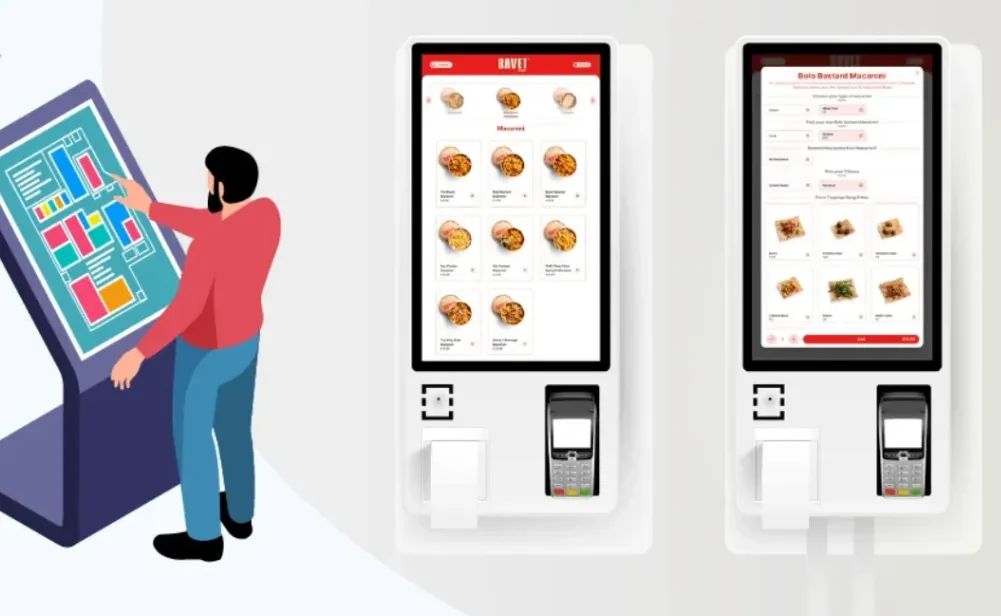
Singapore is known for embracing cutting-edge technology, and the widespread adoption of self-service kiosks is a testament to this commitment. From fast-food chains to retail stores, banking institutions, and healthcare facilities, kiosks in Singapore are becoming a mainstay in customer service and operational efficiency.
With Singapore’s Smart Nation initiative driving technological advancements, kiosk technology is evolving rapidly. These self-service solutions not only reduce human intervention but also enhance accuracy, minimize wait times, and improve overall customer experience.
In this blog, we will explore the rise of kiosk technology in Singapore, its applications across different industries, the latest trends, challenges, and what the future holds for this game-changing technology.
The Rise of Kiosk Technology in Singapore
Several factors have contributed to the rapid expansion of self-service kiosks in Singapore. Here are some key reasons driving this transformation:
1. Strong Government Support for Digitalization
The Singapore government has introduced multiple initiatives, including the Smart Nation strategy and the Infocomm Media Development Authority (IMDA) grants, to encourage businesses to adopt digital technologies, including kiosks.
Grants such as the Productivity Solutions Grant (PSG) provide financial assistance to small and medium-sized enterprises (SMEs) looking to automate their operations. This has led to a surge in businesses adopting kiosk technology to improve efficiency.
2. Growing Demand for Contactless Transactions
With the rise of cashless payment systems and contactless ordering, self-service kiosks have become essential. Singapore’s preference for QR-code payments, digital wallets, and credit card transactions has fueled the demand for kiosk integration.
Popular payment methods in Singapore include:
- PayNow
- NETS FlashPay
- Apple Pay & Google Pay
- Credit/Debit Cards (Visa, Mastercard, AMEX, etc.)
By incorporating these payment solutions, kiosks allow customers to complete transactions quickly and securely without requiring human assistance.
3. Manpower Challenges and Rising Labor Costs
Singapore has been facing a tight labor market, with increasing restrictions on foreign worker quotas and higher wages for local employees. Businesses—especially in F&B, retail, and banking—are turning to kiosks to reduce manpower dependency while ensuring seamless customer service.
4. Consumer Preference for Speed and Convenience
Singaporeans value efficiency, and long queues at retail stores, fast-food outlets, and banks have become a major pain point. Self-service kiosks allow users to place orders, complete checkouts, or make payments in just a few taps, eliminating unnecessary delays.
Industries Driving the Adoption of Kiosk Technology
Kiosk technology is transforming various industries in Singapore. Let’s take a closer look at how different sectors are leveraging self-service solutions to streamline operations.
1. Food & Beverage (F&B) Industry
Self-ordering kiosks have become a staple in fast-food chains, cafes, and food courts across Singapore. These kiosks help reduce wait times, improve order accuracy, and provide personalized menu recommendations.
Examples of Kiosk Use in F&B
- McDonald’s Singapore: Implemented self-service ordering kiosks to cut down queue times.
- KFC & Subway: Use AI-powered kiosks that suggest customized meal options based on customer preferences.
- Food Courts like Koufu & Food Republic: Offer self-payment kiosks to streamline multi-stall orders.
2. Retail Industry
Retailers are incorporating kiosks for self-checkout, price checking, and product browsing, offering customers a more efficient and personalized shopping experience.
Examples in Retail
- Decathlon Singapore: Uses self-checkout kiosks where customers can scan items and pay instantly.
- UNIQLO: Introduced RFID-based kiosks that detect items in the shopping basket automatically.
- FairPrice & Giant Supermarkets: Have deployed self-checkout stations for faster and smoother transactions.
3. Banking & Financial Services
Banks are leveraging kiosks to minimize branch visits by automating basic transactions such as bill payments, fund transfers, and account inquiries.
Examples in Banking
- DBS, OCBC & UOB: Offer digital banking kiosks for cash deposits, withdrawals, and statement printing.
- AXS & SAM Machines: Provide customers with bill payment services for utilities, fines, and taxes.
4. Healthcare Industry
Hospitals and clinics are integrating self-service kiosks for appointment scheduling, patient check-ins, and medical billing.
Examples in Healthcare
- Raffles Medical Group & Parkway Shenton Clinics: Use kiosks for patient registration and queue management.
- Guardian & Watsons Pharmacies: Provide self-service kiosks for prescription refills and online order pickups.
5. Transportation & Public Services
Singapore’s public transport system and government agencies are adopting kiosk solutions to streamline ticketing, check-ins, and form submissions.
Examples in Transport & Public Services
- Changi Airport: Automated immigration clearance and baggage drop kiosks.
- SBS Transit & SMRT: MRT and bus card top-up machines.
- Singapore Post (SingPost): Self-service kiosks for parcel collection and bill payments.
Emerging Trends in Kiosk Technology
1. AI-Powered Kiosks
- Smart kiosks learn from customer interactions to provide personalized suggestions.
- AI-driven chatbots are being integrated to assist users with transactions.
2. Biometric Authentication & Facial Recognition
- Touchless kiosk experiences are gaining popularity post-pandemic.
- Future kiosks may use face scans or palm recognition for payment authorization.
3. Augmented Reality (AR) Integration
- AR-enabled kiosks allow users to virtually try on clothes or visualize products before purchase.
4. Blockchain-Powered Secure Transactions
- Kiosks may soon adopt blockchain technology for safer, tamper-proof payments and identity verification.
5. Multi-Purpose IoT-Connected Kiosks
- Smart kiosks will be remotely monitored to minimize downtime and maintenance.
- IoT-enabled kiosks can interact with mobile devices to provide a seamless user experience.
Challenges of Kiosk Technology in Singapore
While kiosk technology has brought significant advantages to businesses and consumers in Singapore, its widespread adoption comes with challenges. Companies looking to implement self-service kiosks must overcome hurdles related to cost, usability, security, and maintenance to ensure smooth operations.
1. High Initial Investment Costs
Setting up a kiosk system requires a substantial upfront investment, making it a significant financial commitment for businesses, especially small and medium enterprises (SMEs). The costs typically include:
- Hardware expenses: Purchasing the kiosk terminals, touchscreen displays, scanners, and payment processors.
- Software development: Customizing the kiosk interface to match business requirements.
- Integration costs: Connecting the kiosks with existing point-of-sale (POS) systems, inventory management software, and customer databases.
- Installation and infrastructure: Setting up network connectivity, power supply, and kiosk placement logistics.
For large corporations, this investment might be manageable, but for smaller businesses, the cost can be prohibitive without government grants or external funding.
2. System Maintenance and Technical Glitches
Kiosks, like any digital system, require regular maintenance, software updates, and troubleshooting to prevent downtime. Some key issues include:
- Hardware failures: Touchscreen malfunctions, printer issues, or card reader failures.
- Software bugs: Errors that prevent transactions from completing or slow down the user experience.
- Network connectivity problems: A weak or unstable internet connection can disrupt kiosk operations, causing delays or system crashes.
- Wear and tear: Continuous usage can lead to physical damage, requiring frequent servicing.
Without a dedicated IT support team, these technical challenges can cause delays, customer frustration, and revenue loss.
3. Adoption Barriers for Older and Less Tech-Savvy Consumers
While younger generations in Singapore have readily embraced self-service kiosks, older individuals and those unfamiliar with digital interfaces may struggle to use them effectively. Common issues include:
- Difficulty navigating the touchscreen interface due to lack of familiarity.
- Trouble understanding prompts or choosing the right options in multi-step transactions.
- Preference for human assistance, particularly for complex services such as banking or medical check-ins.
To address this, businesses need to offer alternative service options, such as:
- Hybrid kiosks with staff assistance for users who require guidance.
- Voice-activated features and multilingual support to improve accessibility.
- Simplified UI/UX design to make the interface more intuitive for all age groups.
4. Cybersecurity and Data Privacy Risks
As kiosks handle sensitive user data—including payment information, personal details, and transaction history—they are potential targets for cyberattacks. Major security threats include:
- Data breaches: Unauthorized access to customer data due to weak security protocols.
- Malware and hacking attempts: Cybercriminals may install malicious software to steal information.
- Card skimming: Fraudsters may attach devices to card readers to steal credit or debit card details.
To mitigate these risks, businesses must implement robust security measures, such as:
- End-to-end encryption for all financial transactions.
- Regular software updates to patch vulnerabilities.
- Multi-layer authentication to prevent unauthorized access.
- Physical security measures, like tamper-proof hardware and surveillance cameras to detect fraudulent activity.
5. Space and Infrastructure Constraints
In a highly urbanized city like Singapore, where commercial real estate is expensive and space is limited, finding optimal locations for kiosks can be challenging. Key concerns include:
- Placement logistics: Kiosks need to be positioned in high-traffic areas without obstructing movement.
- Power supply and internet connectivity: Ensuring kiosks have stable power and network connections is crucial for seamless operations.
- Storage and maintenance space: Businesses must allocate space for kiosk maintenance, repairs, and hardware replacements.
For small retail outlets or restaurants, fitting multiple kiosks without affecting customer flow can be a difficult balance to maintain.
6. Resistance to Change from Traditional Businesses
Despite the efficiency benefits, some traditional businesses remain hesitant to invest in kiosk technology due to concerns about:
- Loss of personalized customer service that human employees provide.
- Resistance from employees who fear job displacement due to automation.
- Uncertainty over return on investment (ROI), particularly for businesses unfamiliar with digital transformation.
To overcome this, businesses can implement a phased adoption strategy, starting with a mix of kiosk-assisted and human-operated services before transitioning fully to self-service solutions.
Future Prospects of Kiosk Technology in Singapore
Given Singapore’s strong push for automation and digitalization, the future of kiosk technology looks promising. Here’s what we can expect in the coming years:
1. Widespread AI and Machine Learning Integration – Kiosks will analyze real-time customer data to provide smarter, more efficient service.
2. Expansion into New Sectors – Education, government services, and entertainment will likely integrate kiosk solutions.
3. Improved Biometric Security – Expect fingerprint scanning, retina recognition, and voice authentication to enhance security.
4. Hybrid Kiosk Models – Future kiosks will merge automation with human assistance, allowing staff to step in when needed.
5. 5G-Enabled Kiosks for Real-Time Interactions – Faster connectivity will enhance kiosk responsiveness and enable seamless remote troubleshooting.
Conclusion
Singapore is at the forefront of self-service kiosk technology, revolutionizing industries from F&B to banking, healthcare, and public services. With AI, biometric authentication, and IoT integration leading the way, kiosk technology is set to redefine efficiency and customer engagement.
Businesses that embrace these advancements will gain a competitive edge in the ever-evolving digital landscape.