

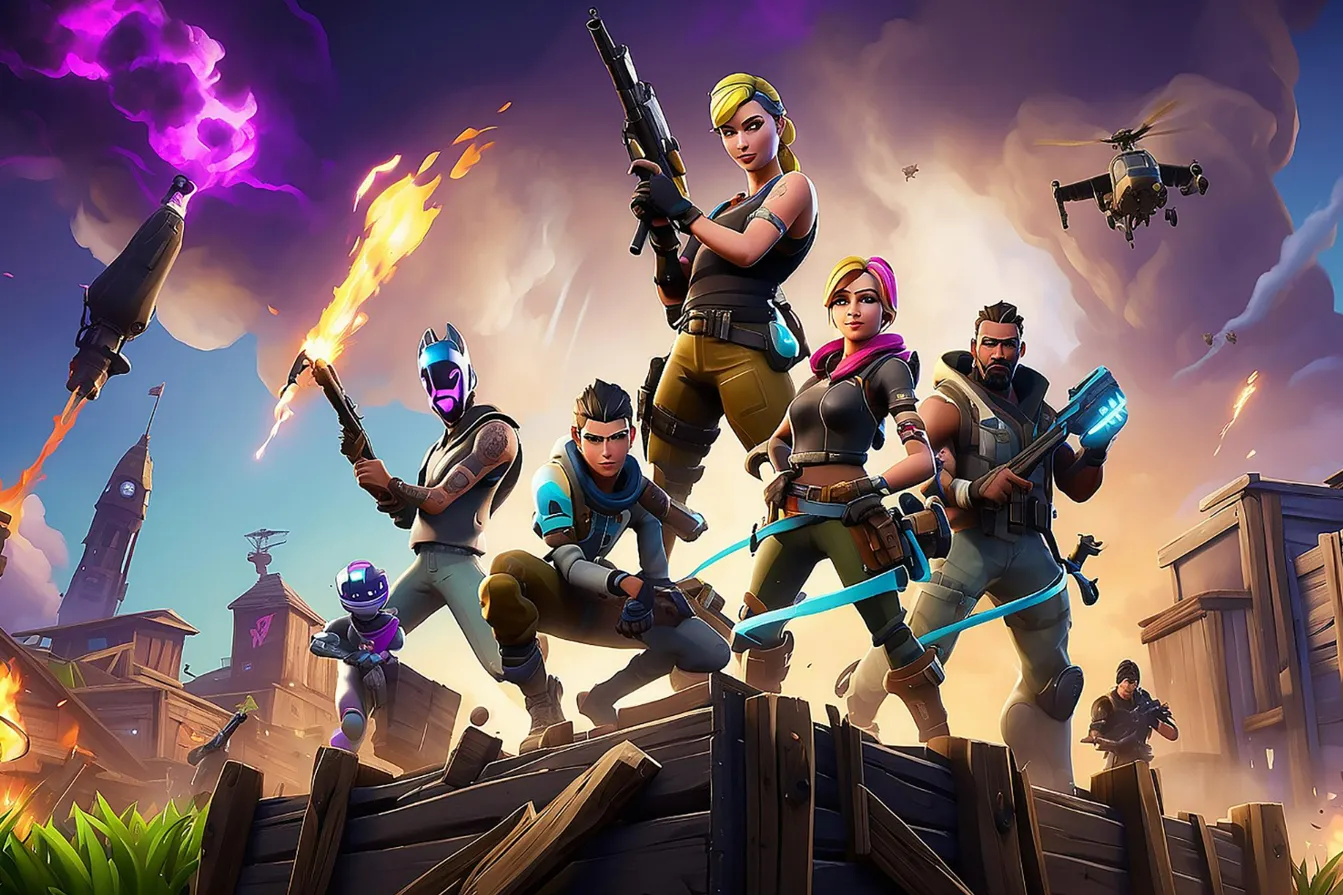
Online gaming has undergone a massive transformation in the past decade, and especially in the last five years. The sphere technically began in the mid-1990s, quickly after the Internet debuted. However, it started to take off in the early 2000s when Adobe Flash-powered games became all the rage. These represented simple gaming apps integrated into websites that ran on Macromedia’s revolutionary multimedia software, which allowed them to have animation quality that surprised many at that time.
Over time, as tech evolved and Internet penetration grew, many entrepreneurs saw the potential of online games. That brought about a new era in home and remote entertainment, free from the constraints of legacy systems. Suddenly, the graphics got incrementally better, and given the low barrier to entry in this sector, various indie minimalistic games started to pop up. Massive multiplayer ones also became in vouge with UXs that empower and inspire.
A shift began with the appearance of dedicated mobile software, with studios moving away from high-end visual appeal and diving into straightforward concepts that keep players engaged. Cosmetics took a back seat in most cases as accessibility, simplicity, and community interaction took center stage. Naturally, all this was driven by streamlined interfaces and gamification elements. The importance of UX in online gaming is what we are exploring more deeply below how game interfaces help fuel this sector and have fostered dynamic and inclusive gaming for players everywhere.
Embracing Minimalism
Minimalism is primarily an art movement that began in the post-war era, meaning following the Second World War. It focuses on prioritizing experiences and values instead of excess and reacted to abstract expressionism and modernism. It became popular in the online arena post-2015 when site designers started implementing flat graphics with no shading as they sought to prioritize user needs over unnecessary complexity.
That is not to say that websites that adopted this style were ugly. They still had quality aesthetics, but they aim to reduce clutter and a user’s cognitive load. When non-essential elements get stripped, points of focus become quickly apparent, and user satisfaction is likely to increase, as causes for frustration have been taken away.
It should also be highlighted that by embracing streamlined narratives, minimalist UX games create more immersive experiences, ones that feel more intimate. That draws players in to have a higher level of emotional resonance with what gets presented. That is why current technology startups operating in the online game landscape are still chiefly adopting minimalist design principles. Clean interfaces also lower loading speeds and, when done right, often prove that less can be more.
The same holds for online gambling operators, as the rise of poker startups post-COVID has shown that those who chose to dabble in this gambling genre, where desktop and mobile apps are still mandatory due to the nature of the service provider, opt for ones with minimalistic aesthetics and UIs. Online sportsbooks and casinos have moved away from making users install software, but poker platforms have not because they thrive on real-time, social, and skill-based gameplay.
Community-Driven Play & Customization
Multiplayer action, without question, is one of the main cornerstones of gaming. There is rarely a game now that appears online where someone competes solely against software. That likely stems from the cultural shift toward social connectivity in digital spaces. People now look for meaningful connections on the Internet, almost as much as they do in real life, and they get them through collaborative mechanics, chats, online guilds, and so on. Roblox, initially a game creation startup, now has one hundred million daily active users, operating as a platform with blocky, customizable aesthetics. While this may be a turn-off for members of past generations, newer ones see it as empowering, a chance to express individuality.
Emerging startups like Core allow people to make games with the Unreal Engine, which gives them a very pro look, which they can enrich with an accessible interface. Core has a very Roblox approach, which shows a trend toward letting the players themselves shape looks and UIs. That has dramatically benefited from artificial intelligence, which has helped create personalized experiences that feel uniquely curated. This aids in player retention and satisfaction.
AI is affecting UIs by letting them evolve based on player behavior. That is the next step in making games adapt to users. For instance, if someone struggles with navigation, the AI simplifies menus or highlights key objectives to make things easier for that player.
Revival of Retro Aesthetics
What’s old is new again. Right?
Nostalgia is a powerful tool, as it evokes familiarity and emotions. Moreover, there was a reason why something was popular at one point in time—it has quality, which has probably not gotten lost and has only been boosted by an old-timey charm.
8-bit visuals and cyberpunk motifs were all the rage a while back, and they are still established and utilized fairly regularly now. Pixel-art visuals reminiscent of 1980s arcade machines and lo-fi animations are far better suited for straightforward gameplay than hyper-realistic graphics. They are also way easier to create but boast similar levels of appeal.
Undoubtedly, there is a cultural fascination with nostalgia, which shows like Netflix’s Stranger Things have spurred on, and so has vaporwave music. These have made the 1980s look cool again and have made new generations crave neon-style games with pixelated art, grids, and synth tunes.