

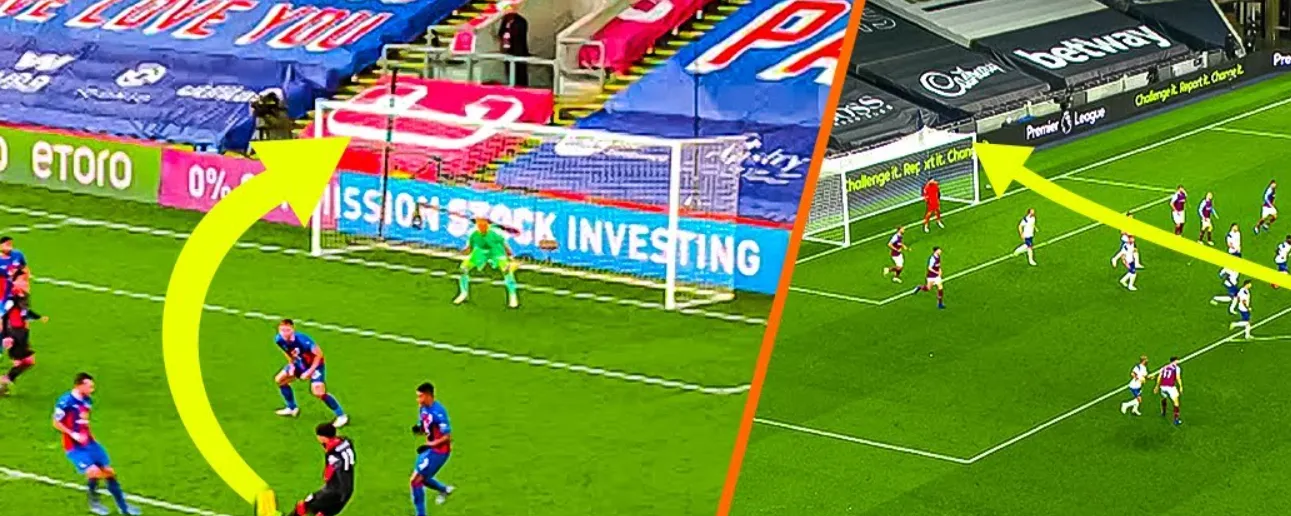
Total‑goals markets in the 2020/2021 Premier League season rewarded bettors who treated goals as the end result of repeatable patterns in chance creation, finishing and defensive structure rather than as random noise. By turning raw scoring figures and expected‑goals data into a structured pre‑match reading, over/under bets became calculated positions on how a match was likely to unfold, not just hunches based on team names.
Contents
- 1 Why Goal and xG Statistics Are a Logical Basis for Over/Under
- 2 What the 2020/2021 Season Looked Like in Terms of Goals
- 3 Team‑Level Goal Profiles and Their Over/Under Implications
- 4 Bringing Expected Goals into Over/Under Decisions
- 5 Comparing Raw Goals and xG to Spot Over/Under Traps
- 6 Building a Pre‑Match Over/Under Checklist from 2020/2021 Data
- 7 Integrating Operator Pricing and Market Bias into Totals Betting
- 8 Keeping Goal‑Stat Logic Separate from Wider Gambling Swings
- 9 Where Goal‑Stat‑Based Over/Under Reading Can Fail
- 10 Balancing Long‑Run Averages with Match‑Specific Conditions
- 11 Summary
Why Goal and xG Statistics Are a Logical Basis for Over/Under
Over/under lines price the probability that a match will cross specific totals, most commonly 2.5 goals, so they implicitly assume something about how many good chances both sides will generate and concede. In 2020/2021, attacks like Liverpool’s and Tottenham’s produced high expected goals per game, while weaker sides, including West Brom, struggled to create quality opportunities, and those differences flowed directly into the typical goal counts in their fixtures. At the same time, defensive records varied widely: Manchester City conceded just 32 goals in 38 games, whereas West Brom allowed 76, so pricing every match at the same totals line ignored fundamental structural contrasts. For bettors, using goal and xG statistics meant aligning over/under decisions with evidence about how teams actually played instead of relying on vague notions of “attacking” or “boring” football.
What the 2020/2021 Season Looked Like in Terms of Goals
Across recent Premier League seasons, roughly half of matches finished over 2.5 goals, and 2020/2021 sat close to that benchmark: data from the league’s trends show that around 50 per cent of games in that campaign went above the 2.5 line, compared with 52 per cent in 2019/20 and 54 per cent in 2021/22. That league‑wide average hid substantial team‑to‑team variation, with some clubs involved in far more open contests than others. For example, numbers from 2020/2021 show that Leeds United’s matches produced 62 goals for and 54 against (116 total), while Crystal Palace finished 41–66 (107 total), whereas Arsenal combined a modest 55 goals scored with only 39 conceded (94 total). The overall outcome was that bettors who treated “the Premier League is high‑scoring” as a blanket truth missed that certain teams and fixtures sat well above or below the median in goal frequency.
Team‑Level Goal Profiles and Their Over/Under Implications
Looking at team‑level goals for and against, alongside xG, revealed where over or under tendencies came from. Manchester City scored 83 and conceded 32, pairing the league’s most prolific attack with the tightest defence, which translated into many wins by two or more goals but also into a substantial number of matches where opponents contributed little to the total. Liverpool and Leicester both scored 68, but Liverpool’s process involved consistently strong xG and slightly underperforming finishing, while Leicester’s total included an out‑sized penalty component, meaning that some of their tallies depended on set‑piece and spot‑kick patterns that could vary week to week. At the other end, Fulham’s 27 goals from 44.4 expected goals highlighted how poor finishing suppressed totals in their games, while West Brom’s 35–76 goal line made them regular participants in high‑scoring defeats. For over/under bettors, these profiles indicated whether goals in a team’s matches came from sustainable chance volumes or from a mix of finishing streaks and defensive collapses that might not repeat on demand.
To make these relationships clearer, it helped to think in terms of broad categories rather than individual clubs.
| Team type in 2020/2021 | Typical goals pattern | Over/under risk profile for bettors |
| High xG, tight defence (e.g. Manchester City) | Wins by clear margins with opponents creating few chances. | Overs on the favourite alone, but risk of clean sheets keeping full‑match totals modest. |
| High xG both ways (e.g. Leeds, Leicester) | Open games with chances at both ends, high combined goals. | Overs and BTTS attractive, but scorelines can be swingy. |
| Low xG in attack, average defence (e.g. Fulham) | Many low‑scoring losses or narrow defeats. | Unders often logical, overs rely on opponents doing most of the scoring. |
| Leaky defence, modest attack (e.g. West Brom) | Frequent multi‑goal concessions, some heavy defeats. | Overs viable when facing strong attacks, risky unders. |
Interpreting teams through this lens stopped bettors from treating totals markets as coin flips and instead grounded them in how each side contributed to the scoring environment. It also underlined that the same over 2.5 line meant different things when applied to a compact, low‑chance team compared with a high‑tempo, high‑xG side.
Bringing Expected Goals into Over/Under Decisions
Expected goals added a deeper layer by estimating how many goals a team should have scored or conceded based on the quality and number of chances created. In 2020/2021, analysis of xG showed that Liverpool, for example, produced attacking metrics similar to their title‑winning year, at around 1.8–2.5 xG per game depending on the model, even when their actual goal output dipped during finishing slumps. Aston Villa’s attack outperformed its xG by roughly 1.5 goals per match in certain periods, largely thanks to clinical finishing and specific game states, suggesting that their headline tally exceeded the quality of chances they were generating. On the other side, West Brom’s low xG confirmed that their limited creativity made high scores heavily dependent on opponents or on rare long‑range efforts. For totals bettors, the cause‑effect was straightforward: when actual goals significantly exceeded xG over a sustained stretch, regression toward the xG baseline made future overs less attractive at unchanged prices, and the reverse was true when finishing underperformance kept raw scores below chance volume.
Comparing Raw Goals and xG to Spot Over/Under Traps
The mechanism for using xG alongside goals was to compare recent match samples and ask whether a team was running hot or cold relative to the chances they were creating. If a side had seen five straight overs driven by clinical finishing from low‑probability shots while their xG per game sat near league average, odds on further overs might quickly overstate their true scoring power. Conversely, when a team’s matches repeatedly landed under 2.5 but their combined xG totals hovered above three, the evidence suggested that either finishing luck or strong goalkeeping was holding totals down temporarily. In that second scenario, bettors could reasonably anticipate future overs when prices did not yet fully respect the underlying shot quality, provided tactical systems and personnel remained stable. Comparing these two layers turned a simple “they score a lot” narrative into a more nuanced judgment about whether a team’s goal trends were sustainable.
Building a Pre‑Match Over/Under Checklist from 2020/2021 Data
Before staking on goals in any 2020/2021 match, a structured checklist helped link statistics to the actual betting line on offer. The starting point was to record each team’s season‑long goals for and against, then narrow the lens to the last five to ten games to capture current tendencies, noting whether these were above or below their season averages. Next came xG and xGA, which indicated whether recent totals were a fair representation of chance quality or the result of finishing variance. Finally, bettors considered tactical matchup—whether both teams preferred open games or controlled ones—and checked how the posted total (often 2.5) related to the combined goal and xG patterns of the two sides.
- A practical sequence for turning 2020/2021 goal stats into an over/under decision: review each team’s overall goals for/against and see how they compare with league averages; check recent run of matches for shifts in tempo or structure; compare raw goals to xG and xGA to identify hot or cold finishing spells; factor in stylistic conflicts (high press vs deep block, possession vs counter); only then ask whether the current total line and odds offer enough margin relative to your expectation of the combined goals range.
Using this step‑by‑step routine replaced vague impressions—“these two usually produce goals”—with explicit reasons tied to numerical patterns and tactical features. It also forced a final sanity check on whether the price already assumed a high‑scoring or low‑scoring contest, which often determined if the bet was value or simply tracking what everyone else expected. Over a season, that discipline mattered more than the outcome of any single ticket, because it kept the process consistent as teams’ forms and finishing luck rose and fell.
Integrating Operator Pricing and Market Bias into Totals Betting
Over/under markets do not exist in isolation; they reflect how operators and bettors collectively interpret goal statistics. Long‑term studies of football betting show that markets sometimes display favourite–longshot bias and overreact to recent outcomes, including goal‑heavy or goal‑light streaks. In practice, when a team’s last few matches produced dramatic scorelines, operators often shaded totals lines higher or lower, anticipating where public money would go rather than strictly following xG trends. That adjustment could either erase or magnify potential edges for bettors who had a more stable view of teams’ underlying scoring potential.
Against that backdrop, it was rational for bettors to examine how different services framed 2020/2021 Premier League totals. When looking at a sports betting service such as a dedicated online betting site, the key question became whether its over/under markets moved aggressively after a short streak of extremes or remained tied to longer‑run scoring and xG patterns. If, for instance, odds on over 2.5 in Leeds fixtures dropped sharply after a series of high‑scoring matches, despite their underlying chance creation and concession already being high, the market might have overcompensated, leaving little room for further value on overs. Conversely, if a string of low‑scoring games in matches involving a strong attack and average defence pushed totals lines lower than their long‑term xG would justify, bettors who tracked the deeper data could justify contrarian positions.
In parallel, some analysts evaluated how interface design and promo placement influenced totals choices. In environments where pre‑match coupons emphasised headline overs or bundled goal‑based bets into accumulators, the default path for users nudged them toward high‑scoring narratives even in fixtures where defensive metrics argued for restraint. For those using ufabet168 during the 2020/2021 season, the question was whether its presentation of goal markets and boosted offers reinforced recent scoreline patterns or made it easy to cross‑check lines against team‑level goal and xG statistics. Viewing the operator’s layout through this analytical lens ensured that over/under decisions followed from numbers first and interface cues second.
Keeping Goal‑Stat Logic Separate from Wider Gambling Swings
Even well‑grounded reads of goal and xG data could be derailed if they were blended with unrelated gambling impulses. When the same account that hosted thoughtfully chosen over/under bets also connected to a broader casino offering, swings in one area often influenced stakes and selectivity in another. After a win or loss elsewhere, bettors might feel pressure to chase big overs or “safe” unders without re‑running their usual checklist on scoring stats and team tendencies. In that situation, the rational move was to treat totals betting on Premier League matches as a distinct activity, with its own records and rules, insulated from short‑term emotional changes triggered within a wider casino environment. Keeping that boundary intact preserved the value of the effort spent examining 2020/2021 goal patterns and reduced the risk that solid analytical edges were wasted on poorly timed or mis‑sized wagers.
Where Goal‑Stat‑Based Over/Under Reading Can Fail
Goal statistics and xG are powerful, but they are still averages, and relying on them without accounting for context can lead to misreads. Sudden tactical changes—such as a switch from a high press to a deeper block, or the loss of a key playmaker—can alter chance creation and concession more quickly than season‑long figures will show. Weather, pitch conditions and match state (early red cards, must‑win stakes) also push individual games away from typical scoring patterns, especially in a compressed schedule where fatigue accumulates. In 2020/2021, Covid‑related absences and rotation issues sometimes forced managers into line‑ups that bore little resemblance to the ones that generated prior goal and xG stats, meaning that blindly projecting those averages forward ignored real‑time changes. Recognising these limits reminded bettors that totals models worked best when supplemented by up‑to‑date information on tactics, personnel and motivation rather than used as standalone predictors.
Balancing Long‑Run Averages with Match‑Specific Conditions
The practical balance was to treat long‑run goal and xG numbers as a baseline, then adjust expectations based on match‑specific factors. If both teams had long histories of high combined xG but entered the fixture with key attackers missing or with reasons to protect a narrow advantage in the table, the realistic total goal range narrowed. Conversely, when two sides with moderate scoring profiles met in a situation where a draw hurt both—such as late‑season battles for Europe or survival—game state incentives could push the match toward more open play in later stages. The 2020/2021 experience showed that bettors who integrated these situational considerations into their reading of goal statistics produced more robust over/under expectations than those who relied solely on historical averages.
Summary
Using 2020/2021 Premier League goal statistics for over/under betting made sense because goals were the visible outcome of measurable patterns in chance creation, finishing and defensive structure, all of which varied considerably across teams. Season‑long and recent goals for/against, coupled with xG and xGA, allowed bettors to distinguish sustainable scoring environments from temporary streaks, clarifying when totals lines under‑ or over‑reflected likely goal ranges. Turning those numbers into a consistent checklist—covering team profiles, recent form, tactical match‑ups and operator pricing—shifted totals betting from intuition to structured reasoning. At the same time, acknowledging the limits of averages, the influence of market bias and the distortions introduced by broader gambling contexts prevented goal stats from becoming a false sense of certainty. Treated as a disciplined tool rather than a shortcut, 2020/2021 goal and xG data gave bettors a more grounded way to judge whether an over or under was a calculated edge or just another guess dressed in numbers.