

Your child watches everything you do. That includes how you care for your teeth. When you skip brushing or rush through flossing, your child learns that pattern. When you stay consistent, your child learns that instead. Your daily choices shape your child’s mouth, breath, and comfort more than genetics. You control the snacks in the cupboard. You control the bedtime brushing routine. You also control how often your family sees a dentist in North Edmonton. These quiet choices can prevent pain, missed school, and costly treatment later. This blog explains how your brushing, flossing, and dental visits leave a mark on your child. It also offers simple steps you can start tonight. You do not need special tools or complex routines. You only need steady habits, clear rules, and a calm attitude about dental visits. Your child’s future smile starts with what you do today.
Contents
- 1 Why your habits matter more than your words
- 2 What research shows about parents and child tooth decay
- 3 Building a strong home brushing routine
- 4 Food, drinks, and snacking patterns
- 5 Shaping your child’s feelings about dental visits
- 6 When life is busy or money is tight
- 7 Turning small actions into lifelong habits
Why your habits matter more than your words
Your child believes what you do. Talk about brushing means little if you fall asleep without brushing. Your actions send a stronger message than any reminder.
Three core habits shape your child’s mouth.
- How often you brush and floss
- What you and your child eat and drink
- How you act before and during dental visits
When these three match your words, your child feels safe. Your child also feels clear about what to do. That calm shows in fewer fights at bedtime and less fear in the dental chair.
What research shows about parents and child tooth decay
Tooth decay is common. The Centers for Disease Control and Prevention reports that more than half of children aged 6 to 8 have had a cavity in a baby tooth.
Studies show a clear pattern. Children whose parents brush twice a day and visit a dentist on a routine schedule have fewer cavities. Children whose parents fear dental care or avoid it often miss cleanings and checkups. That pattern leads to pain and infection.
The table below shows a simple comparison based on common findings from public health studies. It does not show one specific study. It shows how habits line up with common outcomes.
| Parent habit pattern | Child brushing pattern | Cavity risk by early grade school |
|---|---|---|
| Parent brushes twice daily and flosses most days | Child brushes twice daily with help | Lower risk |
| Parent often skips night brushing | Child brushes once a day or less | Higher risk |
| Parent has routine cleanings every year | Child has routine visits by age one to two | Lower risk |
| Parent sees dentist only for pain | Child visits only when there is a problem | Higher risk |
You cannot change your own dental past. You can change what your child sees today.
Building a strong home brushing routine
Start with structure. Children do best when they know what to expect.
Use this simple rule of three.
- Twice a day brushing
- Two minutes each time
- Two people when your child is young
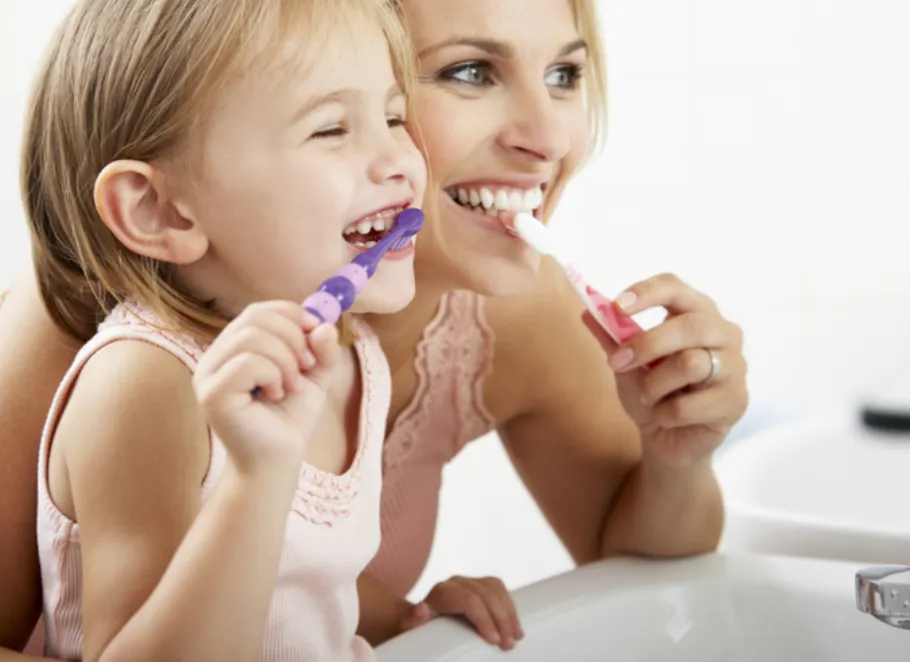
You brush your own teeth at the same time. You stand next to your child. You show each step. You finish your own brushing. Then you help your child finish.
Use a small soft brush and a pea-sized bit of fluoride toothpaste once your child can spit. Before that, use a smear the size of a grain of rice. Fluoride protects the tooth surface from decay. The American Dental Association explains fluoride use for children.
Food, drinks, and snacking patterns
Your grocery cart shapes your child’s teeth. Candy is one concern. Frequent sipping on sweet drinks is another.
Focus on three simple changes.
- Serve water as the main drink between meals
- Keep sweets for rare treats, not daily habits
- Offer cheese, nuts, and cut vegetables instead of sticky snacks
You do not need perfection. You need clear rules that you also follow. When your child sees you choose water and simple snacks, your rules feel fair. Your child may still push back. Your steady choices still protect.
Shaping your child’s feelings about dental visits
Children read your face. If you tense up before an appointment, your child feels that fear. Your words may sound calm. Your body tells a different story.
You can reset this pattern.
- Use simple words like “tooth check” instead of scary terms
- Plan a quiet day, not a big reward, after the visit
- Share short true statements, such as “The dentist counts your teeth and helps keep them strong”
You also need your own routine care. When you keep your appointments, you show that checkups are normal. Your child learns that the dental office is a regular part of staying healthy, like going to the doctor for vaccines.
When life is busy or money is tight
Stress, shift work, and low income can make dental care feel out of reach. You may feel worn out at night. You may feel shame about your own teeth. These feelings are common.
You can still protect your child with three steps.
- Never skip the night brushing, even when you are tired
- Use low-cost fluoride toothpaste and a simple soft brush
- Ask your dental office or local health unit about public coverage or payment plans
Many clinics work with public programs for children. Some schools also run sealant or screening programs. Routine care is often less costly than treating pain or infection later.
Turning small actions into lifelong habits
Your child does not need perfection. Your child needs your steady effort. Three clear habits do the most work.
- Brush together twice every day
- Serve tooth friendly snacks and drinks
- Keep routine dental visits even when life feels busy
Each time you follow through, you teach your child that their mouth matters. You lower the chances of cavities, pain, and missing school. You also give your child a sense of control over their own health. That gift lasts long after the baby teeth fall out.