


Key Takeaways
- Flexible contract models enable effective handling of price volatility and reduce financial risks.
- Advanced planning and proactive procurement ensure timeline stability and cost savings.
- Cutting-edge technology tools enhance visibility, collaboration, and real-time decision-making.
- Sustainable procurement improves both environmental and business performance.
In today’s rapidly changing construction landscape, effective supply chain management is more important than ever. Disruptions such as fluctuating material costs, labor shortages, and increased environmental awareness make efficiency both challenging and essential. By embracing innovative supply chain strategies, construction professionals can optimize every phase of the project, reduce risk, and improve profits. Reliable local supply partners such as Cruco Mill & Industrial Supply North Carolina play a key role in supporting these efforts and ensuring streamlined project delivery.
Beyond traditional methods, forward-thinking companies now prioritize agility and technology to mitigate unforeseen challenges and keep operations running smoothly. These measures address complexities in procurement, logistics, and sustainability, resulting in better project outcomes and greater resilience in a highly competitive market.
Adopt Flexible Contract Models
With global supply chain disruptions, traditional fixed-price contracts can expose both owners and contractors to unwarranted risk. Instead, implementing flexible contract models, such as pegged pricing or cost-plus agreements, empowers both parties to adjust as costs fluctuate. Pegged pricing ties contract values to trusted commodity indices, allowing controlled, predictable adjustments. Meanwhile, cost-plus arrangements guarantee reimbursement of direct costs along with a set profit margin. These models ensure projects remain viable in volatile markets, protecting against abrupt cost escalation while fostering trust among stakeholders. For a deeper dive on contract innovations, resources like Forbes Technology Council discuss real-world approaches to contract flexibility.
Implement Proactive Procurement Planning
Proactive procurement planning helps construction teams anticipate material demands and secure critical supplies before disruptions occur. This involves analyzing project timelines, industry trends, and external risk factors like geopolitical instability or severe weather events. By purchasing materials ahead of schedule, companies avoid rush premiums and ensure prompt delivery, maintaining project momentum. Building strong ties with suppliers also boosts responsiveness, as they can alert contractors about shortages, substitute materials, or future cost spikes. Monitoring procurement best practices is a must to minimize both delays and added expenses.
Leverage Technology for Supply Chain Visibility
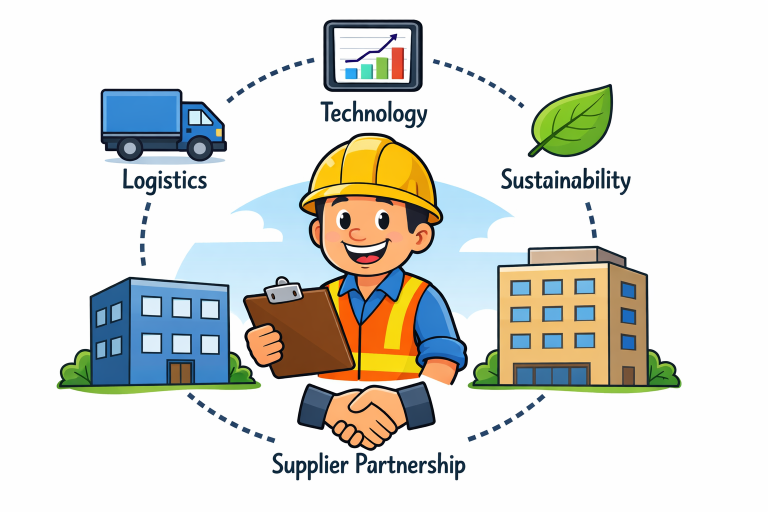
Digital solutions are transforming the way construction companies manage supply chains. Integrated tools like digital twins and the Internet of Things (IoT) provide real-time tracking for everything from inventory to on-site equipment, reducing manual oversight and eliminating bottlenecks. Artificial intelligence (AI) systems aggregate data to forecast demand, optimize deliveries, and prevent stockouts. Cloud-based collaboration platforms connect field and office teams to suppliers and logistics partners, making communication seamless and decisions immediate. Enhanced visibility leads to faster, data-driven decisions, ultimately improving project efficiency and reducing costs.
Embrace Sustainable Practices
Sustainable procurement not only benefits the environment but also strengthens supply chain resilience. Utilizing alternatives such as mass timber, which is prefabricated off-site and delivers durability and fire resistance, helps companies reduce carbon footprints and expedite construction. Local sourcing further decreases transportation emissions and supports regional economies. Sustainable practices also align with growing regulatory and investor pressures for environmental stewardship, making construction supply chains more robust and future-proof.
Standardize Procurement Processes
Standardizing procurement, such as developing a centralized catalog with recurring items and pre-approved alternatives, helps avoid the confusion and inefficiency of last-minute changes. Linking product submittals to catalog entries streamlines approvals, cuts down purchase order duplication, and eliminates delays caused by missing or incompatible supplies. Uniform procurement processes improve both transparency and accountability across the project lifecycle.
Plan Logistics Like a Factory
Factory-inspired logistics planning involves sequencing material deliveries based on real-time project schedules and assigning dedicated laydown areas to minimize double-handling. Pre-booking critical equipment for on-site unloading reduces idle time and operational friction. Adopting a lean approach keeps sites efficient, extends equipment lifespan, and lowers total project costs, ultimately resulting in a smoother path from procurement to installation.
Foster Strong Supplier Relationships
Building ongoing, trust-based relationships with suppliers helps secure reliable sources and even preferential pricing. Instead of negotiating every purchase separately, companies can aggregate demand across multiple projects, giving suppliers better predictability and enabling bulk discounts. This collaboration strengthens supply chain resilience, improves inventory management, and reduces the likelihood of last-minute shortages. Frequent communication also helps align expectations, making it easier to identify and resolve issues before they escalate.
Invest in Workforce Development
To further enhance supply chain efficiency, investing in workforce development initiatives is crucial. Skilled labor is the backbone of successful project delivery, and having teams trained in efficient procurement, logistics, and digital technologies ensures optimal use of all supply chain resources. Construction firms can partner with local vocational schools and industry associations to provide ongoing training, upskilling, and certifications. When equipped with the latest knowledge and methods, workers can better respond to supply chain disruptions, expedite material handling, and seamlessly integrate new tools and technologies. Moreover, a well-trained workforce helps ensure safety, precision, and adaptability, which translates directly into minimized downtime and improved project outcomes.
Monitor and Measure Performance Metrics
Continual performance monitoring is an underappreciated but highly impactful strategy. By tracking key indicators such as supplier lead times, inventory turnover rates, delivery accuracy, and sustainability benchmarks, businesses can pinpoint inefficiencies and identify opportunities for improvement. Advanced analytics platforms enable real-time reporting and visualization of performance metrics, allowing project managers to catch bottlenecks before they escalate, negotiate better terms with suppliers, or refine workflows. Additionally, sharing performance feedback with suppliers fosters a culture of transparency and shared responsibility for ongoing improvement, ultimately raising the standard across the entire supply chain network.
Conclusion
Enhancing construction supply chain efficiency calls for flexible contracting, advanced procurement planning, technology integration, sustainable sourcing, standardized processes, refined logistics, and strong supplier collaboration. Taking these innovative steps helps construction companies overcome today’s complex challenges, ensuring both immediate project success and long-term profitability.