

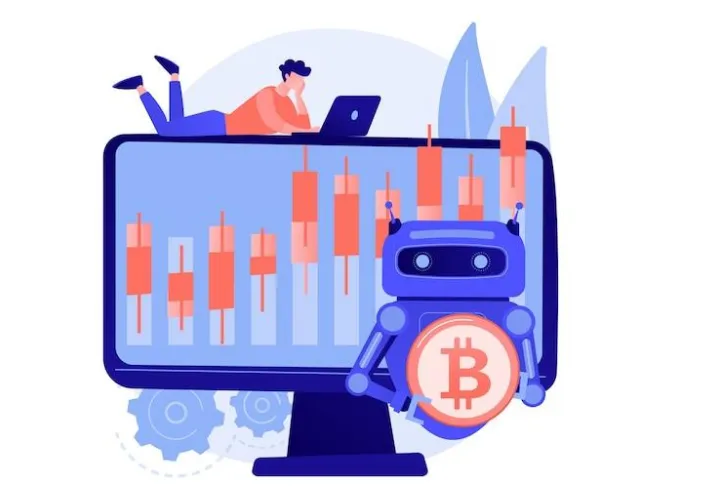
Artificial Intelligence is becoming more refined by the day, with experts continuously striving to improve the technology and make it useful for the future. One of the best use cases of AI is processing massive amounts of data, which is important in a myriad of industries, such as finance. The technology could gather valuable insights from analyzing data, making predictions and real-time calculations, and solving modern issues like optimizing processes and handling complex operations.
AI also has the potential to benefit crypto traders by enhancing security, detecting fraud, or making better decisions. The need for AI tools rises as cryptocurrency assets expand, making trading more challenging. For example, the emergence of meme coins like Dogecoin has caused traders to better diversify their portfolios to navigate volatility but also be wary of new projects that could ensure better gains. With AI tools, they can save time and resources on research and investments.
AI will have a huge impact on trading, so let’s see how traders can leverage it.
Contents
What counts as AI technology for trading?
AI is already expanding through various technologies, which have the potential to answer different problems. Artificial intelligence includes:
- Machine learning (ML) technology, which is responsible for analyzing big volumes of data;
- Deep learning (DL) algorithms are used to extract valuable data from random information;
- Natural language processing (NLP) is essential for computers to understand and analyze human languages;
These technologies represent the foundation of AI capabilities, but the sector involves many other data strategies. For example, predictive analytics models rely on ML, DL, data mining, and statistical modeling, so the process behind it is more complex than it seems.
What are the current advantages of AI in trading?
As AI algorithms evolve in the near future, trading will be much easier, but for now, traders can leverage the following perks:
- Improved risk management: AI identifies potential risks in the market by analyzing a diversity of historical and real-time data;
- Automated trading: Coding AI models allow them to execute trades in accordance with predefined trades and reduce human errors;
- Less emotional trading: Human traders are affected by anxiety and FOMO (fear of missing out) when trading, but AI doesn’t;
Overall, users can benefit from better trade efficiency as they can make quick decisions based on more than emotions. In addition, their trading accuracy improves as AI specializes in generating precise trading signals, so individuals can have more successful trades due to the accuracy of the trade entry and exit point.
How do traders use AI to conquer the market?
AI can work exactly where the trader needs more refinement. For example, it can manage one’s portfolio by offering insights into asset allocation or opportunities for diversification based on historical data and market trends. This will ensure traders have the chance to craft the optimal asset allocation in accordance with their risk profile.
AI would be most helpful in predicting market patterns, which is one of the most challenging tasks for users. That’s because so many external factors can influence the market, such as macroeconomic systems and financial outbursts. AI can make accurate predictions after analyzing technical indicators and news sentiments to generate trade signals.
Finally, traders should take advantage of AI to manage risks, which are plenty in the trading industry. AI-driven risk models can design risk mitigation strategies following a thorough analysis of past price patterns and market volatility, so users have access to innovative tools that set risk parameters.
Still, AI needs to evolve more to be more efficient
The AI craze is just at the beginning, which is why most of its current use cases will find improvement in the future. That means that current AI capabilities are limited and might not be as efficient in guiding traders toward lucrative opportunities while being able to protect them from risks.
AI must learn to adapt to unfamiliar conditions. If an AI tool can manage one’s portfolio during a period of market stability, it must also know what to do when a highly volatile period is close. This is what makes AI special from human intelligence: the ability to instantly adapt to changes.
Another issue is the source of the data that the AI feeds into. If the information is low-quality, the AI will perform poorly, exposing users to increased risks and missed opportunities. The learning algorithm needs relevant data from multiple sources to ensure it can execute trades accordingly and formulate accurate strategies.
Should traders rely solely on AI now?
Considering AI’s limitations, it might be best not to rely entirely on it for now in terms of trades. That’s also relevant considering the continuously challenging regulations around AI and the frameworks of trading around different jurisdictions.
Therefore, it might be best to combine AI with personal critical thinking, technical analysis, and control over emotions. The trading market is still evolving, so there’s much that needs improvement, from legal to technological features, so there’s no need to rush AI analysis at the moment.
AI is valuable at researching and automating certain repetitive tasks. However, when it comes to analyzing the market to decide on the next step, traders and investors should learn to craft opinions as objectively as possible. Refining the decision-making processes requires leaving one’s trading biases behind.
AI will continue growing and adapting its models and algorithms to the fast-paced future of trading assets in worldwide markets. As these models can recognize more complex patterns, it’ll take only several nanoseconds for the tool to adjust the strategy. Until then, traders have to wait for a broader regulatory landscape.
Final take
Artificial intelligence has shown impressive benefits to the financial industry, including strengthening security and automating repetitive tasks. However, the tool can take things to the next level and improve people’s trades by analyzing massive amounts of historical data and creating accurate predictions. At the same time, AI can help mitigate volatility and human errors like emotional trading, which is why more traders are eager to benefit from AI technologies.