

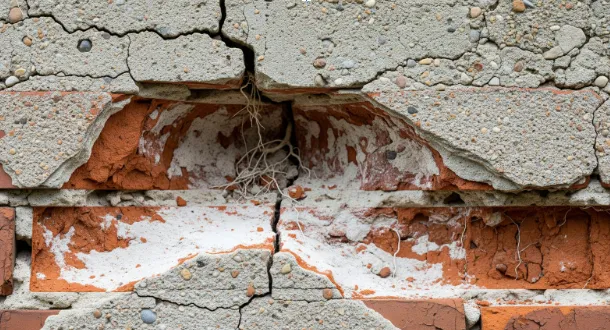
The facade of a building is basically its “face.” It protects the structure from weather and gives the building its look. Common damage includes cracks in masonry, concrete breaking or flaking (spalling), crumbling mortar joints, and failed sealants. These weaken the outer shell of the building.
Typical repair methods include repointing (replacing old mortar), injecting cracks with epoxy or resins, patching damaged areas with compatible materials, and carefully swapping out failing structural pieces like lintels or wall ties.
If you ignore small cosmetic problems, they can quickly turn into serious structural issues. Professional facade repairs help stop this from happening and keep water from reaching the building’s frame-the steel and wood that hold everything up.
As we look at our cities in 2026, knowing how exterior surfaces age is more important than ever for owners and property managers.
Contents
- 1 What Causes Common Facade Damage?
- 2 How to Identify Facade Damage: Key Warning Signs
- 3 Main Types of Facade Damage and Their Risks
- 4 Facade Repair Solutions: Methods and Materials
- 5 Factors Affecting the Longevity of Façade Repairs
- 6 Preventative Facade Maintenance: Tips to Reduce Damage
- 7 When Should You Hire a Professional Facade Restoration Company?
- 8 Frequently Asked Questions About Facade Damage and Repair
What Causes Common Facade Damage?
Weathering and Environmental Exposure
Weather is the main enemy of any building exterior. In areas with strong seasons, the freeze-thaw cycle acts like a slow hammer. Water seeps into tiny pores, freezes, expands by about 9%, and pushes from the inside until the surface breaks. Over many years, this constant expansion and contraction wears down even strong stone and brick.
Temperature is only part of the problem. Wind-driven rain and sunlight also cause serious damage. Strong winds push water into tiny cracks, while the sun’s UV rays slowly break down paints and sealants. This exposure never really stops, so some level of wear happens on every building, no matter how well it was built at first.
Water Infiltration and Moisture Issues
In construction, water is often called the “universal solvent” for a reason. When gutters, downspouts, or flashing fail or clog, water ends up where it should not be. Pooled or trapped water is the main cause of rot, mold, and hidden structural damage. It often works slowly and quietly for years before you see any signs on the surface.
On many newer buildings, problems appear when moisture gets trapped behind tight house wraps or non-breathable coatings. Once water gets in, it cannot dry out easily, so the sheathing starts to rot and the facade eventually fails. This is especially common in humid areas where walls naturally dry out more slowly.
Structural Movement and Settlement
Buildings move over time. Foundations settle due to shifting soil or changing groundwater levels, and this movement puts stress on the exterior. Cracks often form in a stair-step pattern in brick or as long vertical cracks at corners.
Temperature change also causes movement. Materials like steel, brick, and glass all expand and shrink at different rates. If the building does not have enough expansion joints to handle this, the materials push against each other until something breaks. The result can be buckling, bowing walls, or cracking.
To address these complex structural issues, property owners often turn to Nova Construction Services, a leading exterior restoration company experienced in the repair and restoration of structures affected by environmental stress and movement.
Material Deterioration Over Time
Every building material has a working life. A brick facade can last 50+ years, but the mortar between the bricks often needs work every 20-30 years. Metal panels may last decades but can still rust, especially near the coast where salt in the air speeds up corrosion.
As materials age, they change. Sealants dry out and crack, gaskets shrink, and softer stones like limestone can become more absorbent due to pollution. This slow aging calls for a proactive maintenance plan, or the entire system can reach a failure point all at once.
Improper Construction or Maintenance
Some problems start the day the building is put up. Poorly mixed concrete, weak reinforcement, or missing control joints can cause early cracking. Using materials that do not work well together-like hard cement mortar on soft historic brick meant for lime mortar-can make the bricks crack because the mortar is too stiff and will not move with them.
Delaying maintenance is just as harmful. Ignoring a small leak or tiny crack lets water move deeper into the wall. What could have been a quick, low-cost fix can grow into a major restoration if wood or steel inside the wall is allowed to rot or rust over time.
How to Identify Facade Damage: Key Warning Signs
Cracks in Masonry, Concrete, or Stucco
Cracks vary in seriousness. Very thin hairline cracks are often just a sign of drying or slight settling. Wider cracks-larger than a pencil-or cracks in X-shapes or diagonals are big warning signs. These may show real structural stress or foundation problems that should be checked by an engineer.
Vertical cracks along concrete columns are another serious concern. They often mean the steel inside is rusting and swelling (rust jacking). Tracking the width and direction of cracks over time helps show whether the problem is still active or has stopped moving.
Spalling, Flaking, or Eroding Surfaces
Spalling is when the surface of concrete, brick, or stone flakes or breaks away. This usually means moisture has gotten in and frozen, or steel inside is rusting and pushing the surface outward. It is more than a cosmetic issue-falling pieces can be dangerous to people below.
Erosion happens more slowly. On older stone or brick you may see rounded edges, worn details, and a sandy or chalky feel. This shows that the binding material is breaking down, often from pollution or long-term exposure to rain and wind, which makes the facade more open to deeper water entry.
Discoloration, Water Stains, and Efflorescence
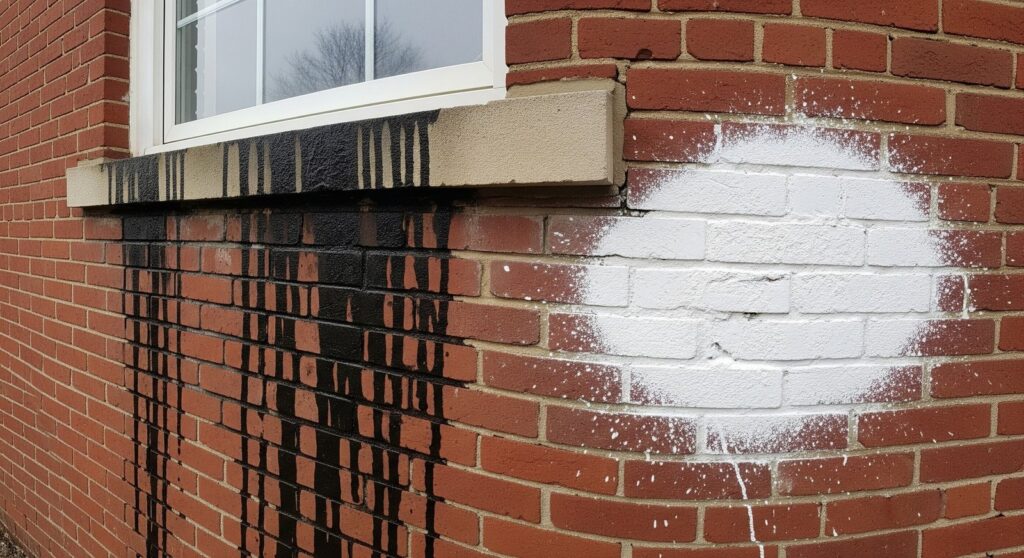
Dark areas or long-lasting water marks, especially ones that remain long after rain, show that moisture is trapped inside the wall. Stains near windows or roofs often point to failed flashing or sealant. Mold or algae growth clearly shows that the surface is staying wet.
Efflorescence appears as a white, powdery film on masonry. As water moves through the material, it dissolves salts and brings them to the surface, where the water evaporates and leaves the salt behind. The powder itself is harmless, but it proves that water is moving through your wall.
Bulging, Bowing, or Loose Materials
A facade should look flat and straight. If an area of brick or cladding bulges outward, this is an urgent issue. Bowing often means that the wall ties holding the facade to the structure have failed or rusted away. That section of wall may be standing mostly by gravity and friction.
Loose bricks or stone that can move by hand are immediate hazards. This movement is often caused by thermal expansion with no space to move, or by rusting steel lintels or angles that swell and push the masonry out of place.
Mold, Mildew, and Biological Growth
Mold or mildew on the outside surface is a bad sign. These grow in damp, shaded areas, which suggests the facade is staying wet too long. Plants or vines growing in mortar joints can worsen the problem, as their roots wedge the masonry apart.
Inside the building, musty smells or damp patches on walls often show that moisture has already passed through the facade. Mold in wall cavities can harm indoor air quality and often requires specialized cleanup, not just a simple wipe-down.
Failing or Outdated Sealants and Joints
Sealants are small components but do a big job. They also tend to wear out faster than most facade parts. When sealants become sticky, crack, or pull away from window and door edges, they leave open paths for water. If you can see gaps around frames, the seal has failed.
Expansion joints need regular attention as well. If flexible joint material has been replaced with hard mortar, or if the joint has been packed too tight, the building cannot move freely with temperature changes. This stiffness is a common cause of cracking and bulging on many mid- to late-1900s high-rises.
Main Types of Facade Damage and Their Risks
Brick and Mortar Deterioration
Brick is strong, but it depends on mortar to act as a unit. When mortar wears away or crumbles, bricks lose their support and the wall’s weight can shift unevenly. Bricks can become loose and eventually fall. Open joints also let water into the inner layers of the wall, where it can rot wood studs or rust steel framing.
This damage affects both strength and safety. A wall with badly worn mortar cannot resist wind or earthquakes as well. It can also fail more quickly in a fire, as gaps allow flames and smoke to move through the wall more easily.
Concrete and Stucco Cracking
On concrete facades, cracks often come before pieces break loose. When a crack reaches the rebar inside, the steel starts to rust. Rust can take up several times more space than the original steel, pushing outward and causing chunks of concrete to pop off. Falling concrete is a serious safety hazard.
Stucco has similar moisture issues. It is porous and can soak up water. If the drainage system behind stucco is poor, moisture can stay trapped against wood sheathing, leading to severe rot in the building frame. Often this hidden damage is only found once the stucco is removed and the structure is already badly weakened.
Metal Component Corrosion
Modern facades depend on many hidden metal parts: lintels, shelf angles, anchors, and ties. If these are not well protected with flashing or coatings, they start to rust. Corrosion weakens them and can again cause rust jacking, which lifts masonry or cracks stone sills.
Rust problems are worse in coastal and high-pollution areas. If a shelf angle fails, an entire band of brick veneer may shift its weight onto window frames or lower brick that was never meant to hold it. This can cause sections to sag, crack, or even collapse.
Sealant and Joint Failure
The main risk from failed sealants is water getting into the building. Even a small gap around a window can let large amounts of water in during a heavy, windy storm. That water can damage finishes inside, promote mold, and ruin insulation. Gaps also allow uncontrolled air flow, which reduces energy efficiency and raises energy bills.
On tall buildings, failed joints can also lead to stone or panel movement. If expansion joints are not working, thermal movement can push cladding out of place, sometimes to the point where panels can slip or detach, posing a serious danger to people below.
Facade Repair Solutions: Methods and Materials
Masonry and Mortar Repointing
Repointing (or tuckpointing) involves cutting out old, weak mortar to a set depth (often about an inch) and refilling the joint with new mortar that matches the original. This work calls for care in matching color, texture, and especially strength. If the new mortar is too hard, it can cause nearby bricks to spall because they have no room to move.
Done correctly, repointing restores water resistance and helps the wall act as one unit again. It is one of the most cost-effective ways to extend the life of a brick building. Many contractors first create a small test area (mock-up) to make sure the new mortar blends well with the existing facade.
Concrete and Stucco Patch Repair
Concrete patch repair starts by removing loose or damaged concrete, cleaning rust from exposed rebar, coating the steel for protection, and filling the area with a repair mortar. These mortars are often polymer-modified so they bond well to the old concrete and resist future water entry.
1. Saw-cut perimeter of repair area to a depth of 3/4 inch.
2. Remove all loose/unsound concrete to sound substrate.
3. Clean exposed rebar to SSPC-SP3 (Power Tool Cleaning) standard.
4. Apply anti-corrosion coating to prepared rebar.
5. Pre-dampen substrate (saturated surface-dry condition).
6. Apply approved polymer-modified repair mortar in lifts.
7. Finish surface to match surrounding texture.
Stucco repair can be simple or extensive. Small cracks may only need flexible sealant. If testing shows moisture behind the stucco, full remediation is needed. This means removing stucco, replacing any rotten sheathing, installing a proper drainage layer, and then applying new stucco coats.
Crack Injection and Structural Stitching
For structural cracks in concrete or masonry, injection is a common fix. Epoxy or polyurethane is injected under pressure into the crack, bonding the two sides and blocking water. This method can restore strength without having to tear down and rebuild whole wall sections.
Structural stitching involves cutting slots across a crack and placing stainless steel helical bars into them. The bars are grouted in place and work like hidden staples, spreading loads across the crack and reducing the chance that it will widen. This is often used where walls have shifted slightly from settlement or temperature changes.
Surface Cleaning and Protective Coatings
Cleaning a facade helps much more than appearance. Removing soot, dirt, and biological growth allows materials to dry properly and slows down chemical damage. Different surfaces need different cleaning methods; for example, high-pressure washing can destroy older brick, so mild cleaners and low-pressure methods are often better.
After cleaning, many facades benefit from protective treatments. Silane or siloxane water repellents can reduce water absorption while still letting water vapor escape. On concrete, anti-carbonation coatings help prevent chemical reactions that lead to rebar rust, which can greatly lengthen the time between major repairs.
Replacement of Deteriorated Units
Sometimes bricks, stones, or terra cotta pieces are too far gone and must be replaced. This “dental” work means carefully removing only the damaged unit and setting in a new one. The replacement needs to match the size, color, and behavior of the original to keep the wall uniform and stable.
On historic buildings, finding suitable replacements can be hard. Contractors may use reclaimed brick from similar buildings or order custom-made terra cotta that matches the old shapes and details. This keeps the repair as invisible as possible and respects the character of the building.
Updating Sealants and Expansion Joints
Replacing old sealant is a regular and important maintenance task. Workers remove the brittle material, clean the joint, and apply new high-performance silicone or polyurethane. The result is a flexible, watertight joint that can move with the building.
Improving expansion joints may mean widening existing ones or adding new ones where none existed. Installing flexible “soft joints” at key locations lets the building release built-up stresses. This step is especially important when upgrading older high-rises to limit future cracking and bulging.
Advanced Technologies for Facade Restoration
New tools are changing how facades are inspected and repaired. Drones with high-resolution and thermal cameras can survey tall buildings quickly and safely. Thermal imaging helps spot hidden moisture or heat loss behind surfaces.
Digital tools like Building Information Modeling (BIM) and photogrammetry create detailed 3D models, or “digital twins,” of building exteriors. Engineers can track each crack and damaged area over years and plan repairs based on real data. In some cases, carbon fiber wraps are used to strengthen weak facade sections with very little added weight or thickness.
Factors Affecting the Longevity of Façade Repairs
Choosing Compatible Materials
Many repair failures happen because new materials do not work well with old ones. If repair mortar is much harder or less breathable than the original, it can trap moisture and make nearby areas fail faster. Good repairs match the flexibility and vapor flow of the existing material.
For stone repairs, this often means using stone from the same or a very similar source. For concrete, the repair mix should expand and contract at about the same rate as the old concrete. Matching these properties helps the repair move naturally with the building as conditions change.
Climate and Environmental Conditions
Local climate has a big impact on how long repairs last. In coastal cities like Miami, you must deal with constant humidity and salt, which speed up corrosion. In cities like Chicago, the main challenge is freeze-thaw cycles. A repair that lasts 20 years in a dry climate might only last a few years in a harsh one.
Repairs should match the building’s specific exposure. For example:
- East-facing walls may heat up more and need more flexible sealants.
- North-facing walls may stay damp and need stronger anti-fungal additives in coatings.
Quality of Workmanship
Facade repair is skilled work. Even high-quality products will fail if used poorly. If mortar is not packed fully into joints, it leaves hidden gaps where water can sit. If rebar is not properly cleaned before patching, rust will continue under the new concrete.
Hiring contractors who specialize in facade restoration, not just general masonry, is key. Skilled crews know how materials behave and follow strict steps for surface prep, mixing, and curing-details that make repairs last much longer.
Frequency of Routine Maintenance
The life of a major repair often depends on care after the job is finished. Buildings that are checked yearly and cleaned regularly tend to keep their repairs intact longer. Simple tasks like clearing gutters and fixing small sealant failures early help avoid big, expensive problems later.
Think of facade care like service on a car: regular small jobs prevent major breakdowns. Property managers who budget for minor ongoing work often avoid huge costs tied to full facade overhauls.
Preventative Facade Maintenance: Tips to Reduce Damage
Regular Inspections and Early Intervention
The best way to limit facade damage is to spot it early. Maintenance staff should walk around the building at least once a year, looking for new cracks, rust stains, loose pieces, or water marks. Catching a failing sealant joint now can prevent a major leak and mold later.
Fixing issues early is always cheaper. Filling a small crack or repointing a small area costs far less than replacing a rusted lintel and rebuilding a whole wall section.
Cleaning and Removing Harmful Deposits
Routine cleaning helps stop harmful buildup. Soot, bird droppings, and salts can all attack building surfaces. Bird droppings are acidic and can damage stone like limestone and marble. De-icing salts can be drawn up into brick, causing efflorescence and spalling near the base.
A gentle cleaning every few years-depending on pollution levels-helps protect the materials. Cleaning also makes it easier to see early signs of trouble that might be hidden under dirt or growth.
Protective Treatments and Water Repellents
High-quality water repellents can reduce how much water gets into porous masonry. These products are breathable, blocking liquid water but allowing water vapor to escape. This helps lower the chance of internal pressure and freeze-thaw damage.
Metal parts need good paint or anti-corrosion coatings to resist rust. Concrete often benefits from penetrating silane treatments that help protect rebar from chloride attack, which is a common reason for concrete facade failure in cities and coastal areas.
Professional Assessment and Ongoing Care
Yearly visual checks by staff are helpful, but they do not replace a full review by an engineer or architect every 3-5 years. These professionals use special tools and training to spot subtle warning signs, like a slight bulge or a particular crack pattern, that suggest deeper issues.
A professional review usually leads to a detailed report that lists current problems and ranks repair and maintenance needs. Owners can then plan work over several years, keeping the building safe and attractive while avoiding sudden large expenses.
When Should You Hire a Professional Facade Restoration Company?
Complex Structural Issues and Building Safety
If you see bowing walls, large diagonal cracks, or pieces falling off the building, bring in a professional restoration company right away. These problems can threaten both the public and people inside the building. Structural repairs may need temporary supports, scaffolding, and oversight from structural engineers, which general contractors often are not set up to handle.
Specialized firms also know how to manage permits, inspections, and liability. Many cities require regular safety reports for tall buildings. A qualified restoration company can complete the work in line with all local codes and safety rules.
Special Requirements for Historic or Landmark Buildings
Working on historic buildings demands special care. Preservation boards often control what materials and methods can be used. A restoration company with historic experience knows how to work with these rules, source suitable materials, and use methods that protect original features.
For instance, a historic building might need a particular lime mortar that is no longer common. An experienced firm can test the old mortar and create a custom mix that matches it closely so the building keeps its original appearance and performance.
Access Challenges and Large-Scale Projects
Work on tall or hard-to-reach facades brings extra challenges. Swing stages, mast climbers, and aerial lifts may be needed. Professional restoration contractors are trained and insured for this kind of work and know how to manage busy sites next to sidewalks and streets.
Large projects also require careful planning. Coordinating materials, schedules, multiple trades, and tenant needs calls for experienced project managers. A specialist firm can keep the job on time and on budget while following strict safety procedures.
Frequently Asked Questions About Facade Damage and Repair
How Often Should Building Facades Be Inspected?
As a basic rule, arrange a professional facade inspection at least every five years. In harsh climates or on older buildings, every three years is often smart. Many large U.S. cities have laws-like New York City’s FISP/Local Law 11-that require such inspections for taller buildings.
In addition, staff should do a simple visual check at least once a year. Finding new cracks, stains, or failed sealant early can stop small issues from turning into large, expensive repairs after the next winter.
Are Cracks in Brickwork an Urgent Concern?
It depends on the size and pattern. Very thin cracks (under about 1/16 inch) are often just cosmetic. Any crack wider than a pencil (about 1/4 inch), or any crack that is growing, should be checked by a professional as soon as possible. Vertical cracks at corners and diagonal stair-step cracks can point to movement in the structure or foundation.
Even cracks that do not look structural still matter because they let water into the wall. In 2026, there is strong awareness of how quickly moisture can lead to rot and corrosion, so sealing even smaller cracks is an important preventive step.
What Is Spalling and Why Does It Matter?
Spalling is when pieces of concrete, brick, or stone break off from the surface. It usually shows a deeper problem like freeze-thaw damage or steel corrosion under the surface. Once the top layer is gone, the material underneath is more exposed and can fail faster.
Spalling is also a safety risk. Falling pieces from higher floors can seriously injure or kill someone below. If you see pitted areas on the facade or find bits of masonry on the ground, you likely have an active spalling issue that needs quick attention from a professional.
What Are the Costs Involved in Facade Repairs?
Costs vary by:
- Building height
- Type of materials
- Scope and severity of damage
A small repointing job on a low-rise might cost a few thousand dollars, while a full restoration of a historic high-rise can reach into the millions. A major cost factor is access-setting up scaffolding or swing stages can be expensive.
Facade work is an investment in the building’s long-term value. Spending smaller amounts on maintenance now often prevents much larger repair bills later. As a rough guide, a professional inspection for a smaller building often runs from about $500 to $1,500, which is modest compared with the cost of ignoring hidden problems.
Beyond the actual repair work, many insurers now review facade maintenance records before renewing policies on taller properties. A clear history of regular inspections and timely repairs can help prevent major failures and may support lower insurance costs and stronger property values in a competitive market.
At the same time, growing “Green Building” standards mean facade repairs are often combined with energy upgrades such as better thermal breaks and insulated glass. This turns necessary maintenance into a chance to lower operating costs for many years to come.