


Brand storytelling services strengthen business identity by building a narrative that goes beyond what a company sells and explains why it exists. By shifting a brand from a basic seller into a clear belief system, these services create an emotional link between the business and its audience, so the brand is felt, not just noticed. In a time when products are easy to copy, a strong story becomes the key difference that keeps a brand in the hearts and minds of its community.
In the 2026 market, where product features start to look the same and price battles cut into profits, professional brand storytelling services give companies the narrative structure they need to win. This method goes past shallow marketing and focuses on honest stories that matter to customers, employees, and stakeholders. By weaving conviction and purpose into every touchpoint, businesses can build a sense of belonging that goes beyond the usual buyer-seller relationship.
Contents
- 1 What Are Brand Storytelling Services?
- 2 Why Storytelling Strengthens Business Identity
- 3 What Are the Key Components of a Powerful Brand Story?
- 4 How Brand Storytelling Services Improve Market Connection
- 5 What Storytelling Strategies Support Brand Growth?
- 6 Measuring the Impact of Brand Storytelling Services
- 7 Case Studies: Business Identity Transformation Through Storytelling
- 8 How to Choose the Right Brand Storytelling Service for Your Business
What Are Brand Storytelling Services?
Core Elements of Effective Brand Storytelling
Effective brand storytelling rests on authenticity, emotional connection, and consistency. It is not just creative writing; it is the deliberate act of shaping how people see a brand through story. At its core, a strong story has a conflict and a resolution, showing how a brand can solve problems or improve lives. Without these elements, content is just plain information; with them, it becomes a memorable experience that holds attention and sparks empathy.
Relatability is another key part. Stories that reflect the audience’s values, struggles, and goals are far more engaging than those that only talk about company wins. By staying true to the brand’s mission and history-sharing real events, including close calls and doubts-storytelling services create a more “human” brand. This openness builds trust, as people are drawn to stories that feel real instead of staged.
Types of Storytelling Services for Businesses
Businesses can use different storytelling formats to reach different parts of their audience. Founder and origin stories are often the strongest, because they highlight the “founding spark” – the exact moment of frustration or inspiration that led to the company’s birth. These stories turn vague missions into personal beliefs. Customer success stories and testimonials also act as social proof, turning case studies into “chaos-to-clarity” stories that show real results.
Beyond written content, visual storytelling through video, infographics, and social media content like Instagram Stories adds energy to the narrative. Culture-focused storytelling, such as employee bios and behind-the-scenes content, shows the human side of the company from within. Whether it is a long-form, documentary-style video for emotional depth or short-form social posts for daily interaction, the aim is to repeat and support the core story across multiple formats.
Why Storytelling Strengthens Business Identity
How Narrative Shapes Brand Perception
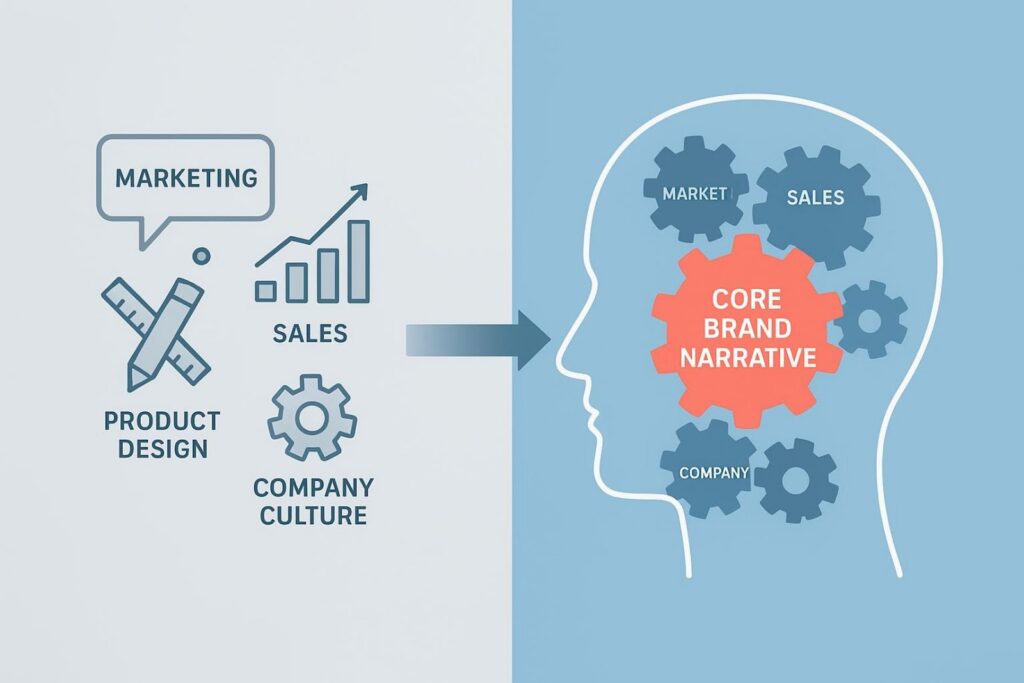
Your brand is not what you sell; it is the story people tell themselves about why they chose you. Narrative structure helps a business guide this inner story. By focusing on meaning instead of just features, storytelling lifts a business, giving it shape and direction. When a brand’s story is clear, it stops chasing every trend and starts leading with focus, making choices faster because the team knows what fits the story and what does not.
A strong narrative works like a startup’s operating system, driving everything from messaging to strategy. If the story is weak or fuzzy, the brand’s identity suffers and looks scattered to the public. But when the story is strong, it acts like a force multiplier, helping growth and letting the market see not just who the brand was, but who it is becoming. It turns the “what” into a “why” that people want to support.
Building Emotional Resonance with Audiences
Logic can justify a purchase, but emotion usually drives it. Successful brands accept this and design emotional experiences that connect with customer identity and goals. By tapping into feelings like joy, nostalgia, or inspiration, storytelling makes a lasting mark that a feature list never can. Over 76% of consumers are more likely to buy from a brand they feel close to emotionally, showing that “feeling” is a real business asset.
Emotion-aware storytelling explains why a brand matters to a customer’s hopes and fears. Whether it is the grit and resilience in a cinematic ad or the sense of belonging built through shared values, these emotional tones shape the brand’s personality. This connection is what builds long-term loyalty, turning casual buyers into strong supporters who see the brand as part of who they are.
Aligning Internal Culture and External Communication
The gap between inner values and outer messaging is a common brand problem. Storytelling services work to close this gap by making sure the “why” shared with the public is the same “why” lived by employees. When a story becomes part of how the company works-onboarding, hiring, and daily habits-alignment feels natural. Employees stop asking what the company stands for because the answers show up in everyday choices and language.
Inside the company, storytelling brings teams together around a shared purpose and helps everyone see the larger mission. When internal culture truly matches the brand promise, the outside story feels more believable. This kind of alignment is a strong competitive edge, as engaged and aligned employees can outperform rivals by large margins. It keeps the brand promise from feeling like make-believe and turns it into daily practice.
What Are the Key Components of a Powerful Brand Story?
Identifying Authentic Founder and Origin Stories
The strongest brand stories often sit in plain sight, hidden in the founder’s first reason for starting or the problem that kept them awake at night. These stories work because they are specific and rooted in real conviction. They are not full life histories; they are the turning point where personal frustration became a company mission. Sharing the “rough edges” and doubts builds a level of trust that pure product promotion cannot match.
A founder’s voice often acts as the center of the story, especially in a young business. By drawing out these early moments of real conviction, storytelling services help a brand sound like a real person with something to prove, not a nameless company trying to impress investors. This people-focused story lowers barriers and makes the brand feel approachable and relatable to its target audience from the start.
Translating Vision, Mission, and Values into Stories
Vague mission statements are easy to forget, but stories turn those missions into meaning. People do not just buy products; they support ideas and shared beliefs. A strong brand story takes the “vision” and turns it into a real experience the audience can feel. For example, if a brand values “innovation,” the story should not simply claim it; it should show it through a story about beating a tough technical challenge or shaking up a stale industry.
By spelling out the belief that drives the business-what the company thinks should be different about the world-storytelling gives people a reason to stand with the brand. This view of the world is what creates a group of true followers. When values show up inside stories about real impact, they stop being corporate checkboxes and start becoming the heartbeat of the business identity.

Adapting Stories Over Time to Reflect Growth
A brand’s audience changes over time, and its story should change too. As a company grows, its narrative must adjust to match its current reality. Many startups make the mistake of holding on to an old origin story that no longer fits their larger market or new product lines. Updating a story does not mean cutting off your roots; it means building on them in a clear way so you stay current and believable.
A refreshed narrative lets a brand reintroduce itself during new phases, such as entering new regions or moving into a new customer group. By keeping the story aligned with company growth, businesses create a steady line of recognition. This steady change helps the brand stay relevant and avoids the “stuck in the past” problem that can cause the market to move on.
How Brand Storytelling Services Improve Market Connection
Connecting Brand Narrative to Customer Needs
The link between inner culture and outer story is always customer relevance. Storytelling services help find the main tension in the market or the customer’s day-to-day experience that the brand exists to fix. By placing a product or service into a real-life situation, the story helps the audience see why the brand matters to them. It shifts the focus from “what we do” to “how we help you become who you want to be.”
Relatable stories show that the brand cares about and recognizes customers’ challenges. Instead of a one-way stream of features, storytelling invites the customer into a story where they are the hero and the brand is the guide. This connection is key for leading the audience through the buyer’s journey and building enough trust to encourage the next step.
Consistent Messaging Across Content Formats
Consistency in language, message, and tone builds brand trust over time. When messaging jumps around from one channel to another, it confuses people and weakens the business identity. Storytelling services, such as those offered at https://builtfor.studio/, help make sure every interaction—from a serious LinkedIn thought-leadership article to a light, behind-the-scenes video—feels connected and intentional. This steady voice creates a sense of familiarity that makes the brand easy to recognize.
When teams hear the same main ideas repeated in different places, they start to see the story as something real and usable. A unified story means that wherever a customer meets the brand, the experience lines up. Using many content types to echo the same core narrative from different angles strengthens the overall brand identity with each touchpoint.
What Storytelling Strategies Support Brand Growth?
Leveraging Narrative as a Brand Asset
In a crowded market, a brand’s story is one of its most valuable invisible assets. It is a strategic tool for defining the brand and supporting growth from the inside out. Unlike product features, which others can copy, a unique journey and point of view cannot be duplicated. By using narrative with clear intent, businesses can compete on beliefs and identity fit instead of only price and features.
This method creates long-lasting advantages that standard financial reports often miss. A strong story builds belief and earns trust before a product is ever used. As a brand grows, its story acts as the spine that supports new projects, helping growth happen without losing the brand’s “soul” or purpose. It works like compound interest, adding up to long-term brand strength and value.
Integrating Story with Marketing and Content Initiatives
Storytelling should be the special element that lifts content marketing from average to standout. Instead of treating stories as one-time campaigns, they should act as the base for the whole marketing plan. Every piece of content should reflect the brand’s narrative so that marketing efforts become real drivers of business results rather than just costly entertainment. This link makes it easier to grow the message without starting from scratch each time.
By documenting the story in a clear, repeatable way, businesses can use it across all functions-onboarding, sales training, investor decks, and more. This keeps the story consistent even as the company scales and more people join. When the story is built into the full customer journey, it creates a sense of forward motion that supports faster and smarter growth.
Measuring the Impact of Brand Storytelling Services
Key Metrics for Storytelling ROI and Awareness
Storytelling is creative, but its effects can and should be measured. ROI shows up in numbers like customer acquisition cost (CAC), lifetime value (LTV), and retention rates. Brands that handle their narrative well often see shorter sales cycles and larger deals, especially in B2B spaces. Watching website engagement, social shares, and content consumption patterns gives a data-based view of how well the story is connecting.
Beyond direct sales, storytelling ROI appears in brand awareness and recall. Metrics such as “Share of Mind” and differentiation scores help businesses see if they stand out in a busy market. Strong storytelling services connect these personal narratives to clear business gains, proving that a well-told story can be a strong driver of financial growth.
Evaluating Changes in Brand Perception and Loyalty
Qualitative signals matter as much as numbers when measuring storytelling success. Sentiment analysis can show whether a story is building the desired emotional ties, such as trust or inspiration. Customer interviews help reveal if people see the stories the way the brand intended and whether those stories are creating deep emotional bonds that lead to long-term loyalty.
Shifts in referral rates and brand advocacy are also key markers. When customers start sharing the brand’s story with others, it shows that the narrative has moved from the company into the wider community. Watching these changes in perception over time helps businesses adjust their storytelling approach across multiple quarters, keeping the core message intact while tuning it for stronger results.

Case Studies: Business Identity Transformation Through Storytelling
Real-world Examples of Brand Storytelling Success
Many global brands have used storytelling to lock in their business identity. Warby Parker changed the eyewear space not just with lower-cost glasses, but by tying its story to social good through its “buy a pair, give a pair” model. Starbucks grew from a simple coffee shop into a “third place” by using Howard Schultz’s Milan coffee bar experience as its origin story. These narratives turned products into movements.
Other examples include Patagonia, which weaves environmental activism into every campaign, and TOMS, which built giving into its very identity. Nike continues to lift up athletes with its “Just Do It” story, while Apple presents its devices as tools for personal change. These brands do more than sell items; they sell a sense of belonging to a group that shares their grit, values, and view of the future.
How to Choose the Right Brand Storytelling Service for Your Business
Criteria for Evaluating Storytelling Partners
When choosing a brand storytelling partner, the most important factor is their ability to find the real “truth” in your business. Look for a service that puts honesty ahead of flashy visuals. A strong partner will spend time digging into your history and talking with leaders to find the moments of real conviction that define your brand. They should bring a clear framework for turning these raw insights into a full messaging system that can be used across all departments.
Also look at their skill with multi-format strategy. A good partner should know how to adjust a core story for different platforms without losing its heart. They should stay focused on business results, showing how their storytelling work will drive loyalty, retention, and other key metrics. The right service will not just tell a story; they will help you live it, setting your brand up to lead the next decade by being the one people choose to believe in.
In the years ahead, the most successful businesses will be those that treat their narrative as a living asset. As we move into 2026 and beyond, the ability to communicate a brand’s “soul” will be a main factor in what customers choose. Beyond the first purchase, storytelling supports a deeper “post-purchase” relationship, where the story keeps adding value and meaning long after money changes hands.
This ongoing story loop is what eventually turns a regular business into a legacy brand, keeping the identity strong through market changes and culture shifts. By investing in professional storytelling, businesses are not just buying content; they are securing a lasting place in the culture and daily lives of their audience.