

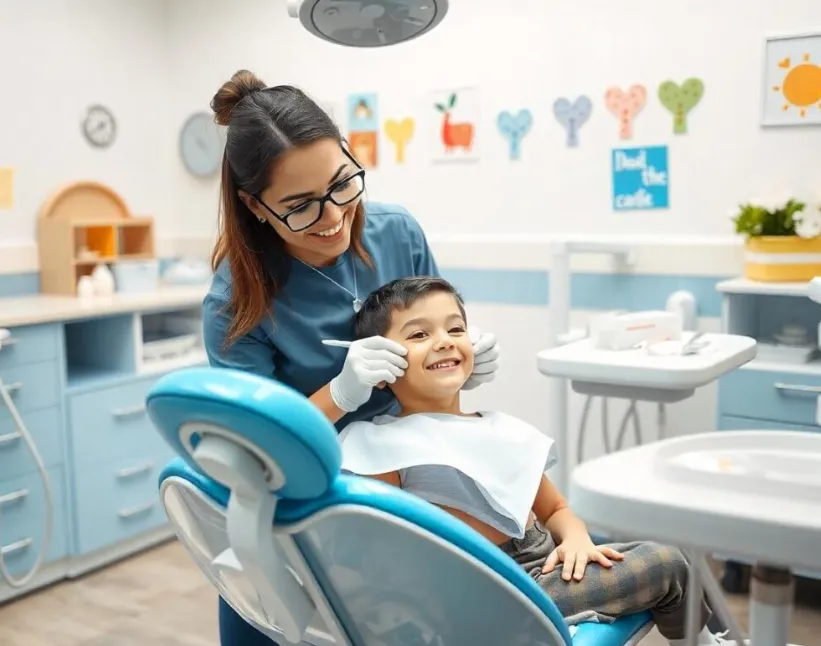
Your smile is personal. Your care should be too. Today, family dentistry uses simple, smart technology to shape treatment around your daily life, your fears, and your goals. Digital tools now help your dentist see problems early, explain them in plain language, and plan care that fits your budget and schedule. In a Kokomo dental office, you might see cameras that show every surface of each tooth, scanners that replace sticky impression trays, and records that move safely between providers when you need them. Each tool has one purpose. It helps your dentist know you better and treat you with less guesswork and less stress. This blog explains how these tools work for you, how they protect your health, and how they support care for your whole family. You will see how technology can make each visit shorter, clearer, and easier to handle.
Contents
- 1 Why personal care matters for every family member
- 2 Digital X-rays that focus on safety and early warning
- 3 Intraoral cameras that let you see what your dentist sees
- 4 Digital scanners that replace sticky molds
- 5 Electronic records that keep your story together
- 6 Custom plans for kids, adults, and older adults
- 7 How technology lowers fear and builds trust
- 8 Questions to ask at your next visit
- 9 Taking the next step for your family
Why personal care matters for every family member
Every month is different. Every stage of life is different. A child who sucks a thumb, a teen with braces, an adult with grinding, and a grandparent with dry mouth all need different care. One plan does not fit all. You deserve care that matches your age, your health history, and your comfort level.
Modern tools help your dentist see those differences. Then your dentist can adjust cleanings, checkups, and treatment to match what you need right now. This protects you from missed problems. It also protects you from care you do not need.
Digital X-rays that focus on safety and early warning
Digital X-rays use sensors instead of film. You sit for the picture in much the same way. Yet the result is clearer and ready in seconds. Radiation is lower than in older methods. The U.S. Food and Drug Administration explains that dentists now use the lowest dose that still shows what they need. That means safer care for children and adults.
Digital images also help with early warning. Your dentist can zoom in to see tiny spots between teeth or near fillings. Early care is often simpler. It can mean a small filling instead of a root canal. It can mean a short visit instead of an emergency.
Digital X Rays Compared To Traditional Film
| Feature | Digital X Rays | Traditional Film |
|---|---|---|
| Radiation exposure | Lower | Higher |
| Image timing | Seconds | Several minutes |
| Image quality | Can zoom and adjust | Fixed size and contrast |
| Record sharing | Easy electronic transfer | Mail or hand carry |
| Chemical use | None | Film developers |
Intraoral cameras that let you see what your dentist sees
An intraoral camera is a small device that fits in your mouth. It sends clear pictures to a screen in the room. You see cracks, stains, and worn spots as your dentist talks. This turns a confusing talk into a clear picture.
This simple tool helps in three ways.
- You understand problems faster.
- You can ask direct questions.
- You can watch changes over time.
Children often respond well to this. They see sugar bugs on their teeth. They see how brushing changes their mouth from visit to visit. That picture can carry more weight than many words.
Digital scanners that replace sticky molds
Many people dread old impression trays. Thick putty, strong taste, and gagging make a hard memory. Digital scanners change that process. Your dentist moves a small wand over your teeth. A 3D model appears on a screen. You breathe and swallow during the scan.
This helps your care in three ways.
- Comfort improves for both children and adults.
- Accuracy improves for crowns, bridges, and aligners.
- Time shortens because many scans are sent straight to the lab.
This 3D image also supports custom plans. Your dentist can show how your bite fits together. Your dentist can point out where teeth wear down or shift. Then you can decide together on night guards, aligners, or other steps.
Electronic records that keep your story together
Electronic health records gather your past visits, X-rays, and notes in one place. Your dentist can see your history in seconds. This includes allergies, medicine use, and medical conditions. The Office of the National Coordinator for Health IT explains that this kind of record supports safer care and fewer repeat tests.
For you, that means three gains.
- Less form-filling at each visit.
- Faster sharing with specialists when you need them.
- Stronger planning for long-term care.
When your child moves to a new school or you change jobs, your record does not start over. Your story follows you. That protects you from gaps in care.
Custom plans for kids, adults, and older adults
Technology is only helpful when it changes your daily care. Modern family dentistry uses these tools to shape plans for each age group.
For young children, your dentist can use cameras and X-rays to watch growth and catch early cavities. Your dentist may space visits based on your child’s risk and brushing habits. Your child’s plan may include sealants, fluoride, and short visits that build trust.
For teens and adults, your dentist can use 3D scans and photos to plan braces or clear aligners. Your dentist can track grinding, sports injuries, or wisdom teeth. Your plan might focus on mouth guards, straightening, or stain care.
For older adults,s your dentist can track dry mouth, gum changes, and worn teeth. Digital tools help fit partials and dentures that feel more stable. Your plan may adjust for other health conditions and medicines.
How technology lowers fear and builds trust
Many people carry fear from past dental visits. Cold rooms, strange tools, and unclear talk leave scars. Modern tools can soften that pain.
Pictures on a screen replace guessing. Quick X-rays replace long waits. Scanners replace trays that cause gagging. Clear records prevent you from telling your story again and again. These small changes show respect for your time and your feelings.
When you see what your dentist sees, you gain control. You can say yes or no with more confidence. That sense of control can reduce fear during each visit.
Questions to ask at your next visit
You have a right to understand your care. You can ask direct questions like these.
- What digital tools do you use during exams and treatment
- How do these tools change my care plan
- How do you protect my X-rays and records
- Can you show me my teeth on the screen and explain what you see
Clear answers show a practice that values your trust and your safety.
Taking the next step for your family
Technology does not replace your dentist. It supports better judgment and stronger listening. When a practice uses these tools well, every member of your family gains more comfort, more clarity, and more control. Your visits become shorter and more focused. Your care starts to match your real life.
You deserve that level of attention. At your next checkup, look around. Ask what each tool does for you. Then choose the path that keeps your whole family healthy, informed, and heard.