

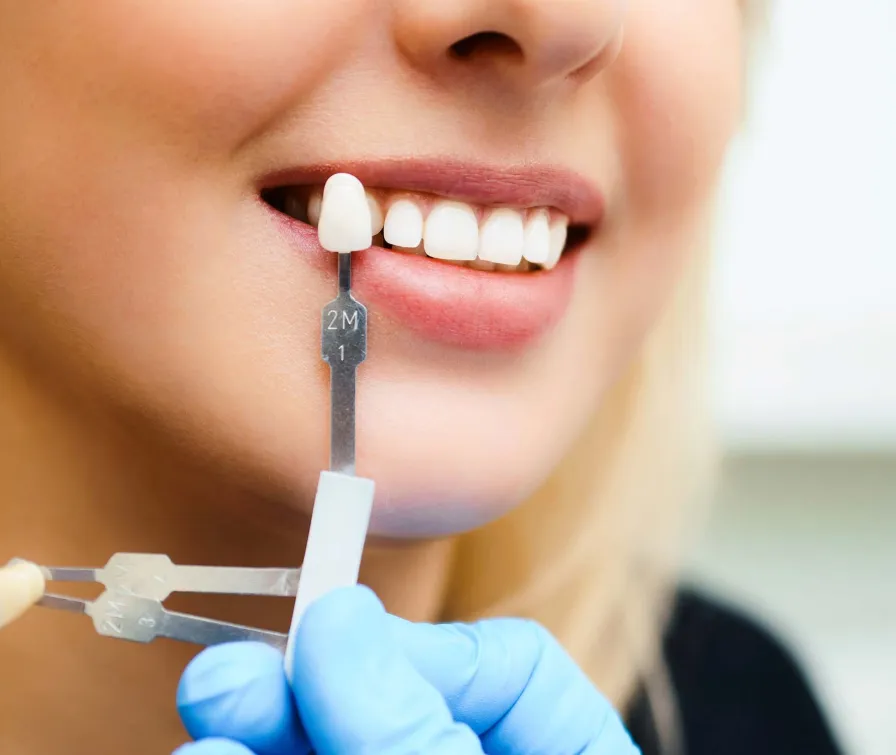
You treat grandparents, parents, and children who all want one simple thing. They want their teeth to look like they belong in the same family. Digital shade matching helps you protect that trust. It gives you repeatable color choices for crowns, bridges, and implants across decades of care. It also reduces guesswork that once depended on memory, lighting, and mood. Today you can scan, record, and share tooth shades with your lab in seconds. As a result, you build continuity for patients who move, age, or need new work near old work. A Falls Church dentist can match a crown to a twenty year old restoration from another office. You can do the same. This blog shows how digital shade tools support cohesive multigenerational restorations, cut remakes, and protect patient confidence.
Contents
- 1 Why consistent color matters for every generation
- 2 How digital shade matching works in daily care
- 3 Comparing traditional and digital shade matching
- 4 Building continuity across decades of care
- 5 Serving children, adults, and older adults with one system
- 6 Reducing remakes and patient stress
- 7 Bringing your team and patients on board
Why consistent color matters for every generation
Shade is not a small detail for families. It shapes how patients feel in photos, at work, and at school. When a new crown does not match the tooth next to it, most patients see it every time they look in a mirror. Over time that creates shame and distance.
Families notice when older relatives have dark crowns or bright white veneers that do not match. Children notice when a parent will not smile. That becomes a quiet lesson about hiding. You can break that pattern. You can give each person a mouth that looks steady and natural through life.
Color continuity matters in three common situations.
- New crowns next to older crowns
- Implants placed near long standing fillings
- Anterior work for siblings who want similar smiles
How digital shade matching works in daily care
Digital shade systems use a handheld camera or scanner to read tooth color. The device shines controlled light on the tooth. It then records the light that bounces back. Software converts that data into a shade map that you can save.
You get three clear steps.
- Scan the tooth or restoration
- Review the shade map on screen
- Send the file with your lab script
In contrast, a classic shade guide depends on your eyes. Your eyes change throughout the day. Room light changes. Stress and fatigue change how you judge a match. Digital tools hold steady. They give you a record that you can pull up years later.
Evidence supports this move. A review from the National Institutes of Health explains that digital devices can improve repeatability of shade selection across visits and providers.
Comparing traditional and digital shade matching
| Feature | Traditional shade guide | Digital shade matching |
|---|---|---|
| Source of match | Clinician eye and room light | Device sensor and software |
| Record over time | Written shade name only | Stored images and numeric values |
| Consistency across visits | Varies with mood and fatigue | Stable when you repeat the scan steps |
| Communication with lab | Text notes and photos | Standard files with shade maps |
| Support for remakes | Often new guess from scratch | Direct reuse of prior shade data |
| Use in mixed dentitions | Hard to blend baby and adult teeth | Segmented maps for each tooth segment |
Building continuity across decades of care
Families move. Insurance changes. Staff turns over. Restorations stay in mouths through all of that. You protect patients when you treat shade data as part of their health record.
You can create a simple shade protocol.
- Scan key teeth at baseline for new patients
- Rescan when you place any anterior crown or veneer
- Store shade files with clear labels by tooth and date
Later, you can open that record when a child returns as an adult, or when a grandparent needs a new crown next to an old bridge. You can match the earlier value so the new work blends with what is already in place. That steadiness comforts patients who fear change.
Serving children, adults, and older adults with one system
Teeth do not keep the same color for life. Kids often have brighter enamel. Adults show more wear and staining. Older adults may have darker dentin and existing metal-based crowns.
Digital shade matching helps you track those shifts.
- You can store a record of a teenager’s natural shade before orthodontics.
- You can match a young adult’s implant crown to that earlier enamel tone.
- You can match a new crown for an older adult to a bridge placed years ago.
That same data also supports prevention talks. When you show a patient how their shade changed over a decade, you can tie that to tobacco, coffee, or dry mouth. The National Institute of Dental and Craniofacial Research explains that lifestyle and medical issues can change tooth color and enamel quality.
Reducing remakes and patient stress
Every remake costs money and time. It also erodes patient trust. Many remakes come from small shade errors that only show once the crown is in the mouth under natural light.
Digital shade matching lowers that risk in three ways.
- You capture objective shade data at the start.
- You give the lab a clear target with images and numbers.
- You can repeat the scan at insertion if something looks off.
When you catch a mismatch early, you avoid long debates. You and your lab can compare the stored values and decide on a fix. Patients see that you planned for this. That reduces anger and blame.
Bringing your team and patients on board
Success with digital shade tools depends on habits. You can train your team to treat shade scans like blood pressure readings. They happen at set points and follow a set sequence.
Use three simple steps with patients.
- Explain that you will scan their teeth to record natural color.
- Show them the shade map on the screen.
- Tell them you will use that record to keep their smile steady as they age.
Families respond to that promise. They want grandparents and children to share more than stories. They want shared smiles that feel honest. Digital shade matching helps you keep that promise through each season of their lives.