

There’s something magical about hearing the click of a cassette tape going in.
That chunky, tactile feel of a Game Boy.
The warm warble of an analog synth as it whines its way through a vintage sci-fi tune.
In a world obsessed with speed, upgrades, and shiny new features, retro tech is stubbornly — beautifully — making a comeback.
And it’s not just nostalgia. It’s something deeper. Something real.
Contents
The Romance of the Past
Let’s be honest. Technology today is impressive — we’re practically holding supercomputers in our pockets. But somewhere along the way, we lost a bit of charm.
Touchscreens replaced buttons. Interfaces became too clean. Too clinical.
Retro tech? It wasn’t perfect. It was glitchy. Sometimes clunky. But it was also full of soul.
That’s why people are dusting off their Nintendos, plugging in old MIDI keyboards, and lining shelves with VHS tapes. They’re chasing more than a memory. They’re craving a connection — one that’s tactile, imperfect, and human.
Old Games: More Than Pixels
Ever booted up Super Mario Bros. recently?
There’s a simplicity to it that feels like a breath of fresh air. No microtransactions. No endless updates. Just jump, dodge, save the princess.
Retro video games like Donkey Kong, Tetris, and Zelda weren’t just iconic — they were ground zero for gameplay mechanics still used today. And here’s the thing: these games were hard. They didn’t hold your hand.
You learned by playing. By losing. Over and over.
Today’s gaming scene may be dominated by cinematic experiences and online battle royales, but the roots go back to cartridges and coin slots. That retro style of challenge, design, and storytelling still resonates — especially in a world where instant gratification is the norm.
It’s why developers are releasing new games in 8-bit style. It’s why streamers dig into vintage titles for their Twitch audiences. People are hungry for authenticity — and retro gaming delivers.
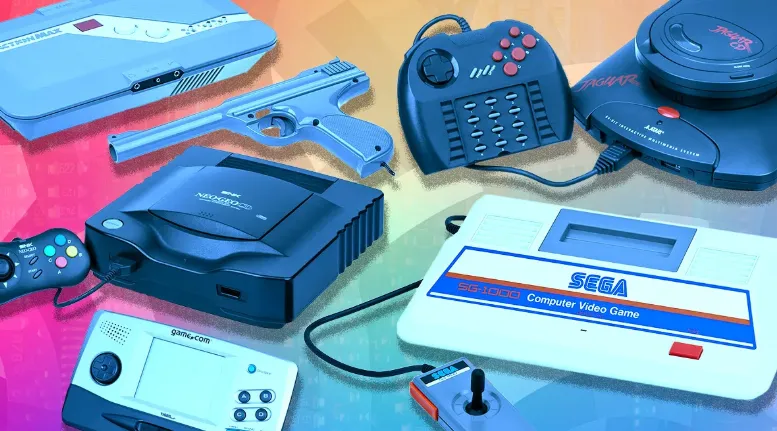
Consoles That Refuse to Die
The NES Classic sold out within minutes when it was re-released.
The Sega Genesis Mini followed — and flew off shelves.
You’d think there’d be no market for this stuff. After all, we’ve got PS5s and Xbox Series Xs now, right? But it turns out, people want to rewind the clock.
There’s comfort in blowing into a cartridge (even if that never really helped). There’s joy in holding a controller that rattles slightly in your hands because it’s older than your little cousin.
And then there’s the community. Retro console enthusiasts gather online and at conventions, swapping tips, trading games, and modding old machines. It’s more than a hobby. It’s a lifestyle.
Synths: The Sound of Something Real
Let’s talk sound.
Digital music production today is powerful, convenient, and practically limitless. But the vintage synth community? They’re keeping the analog flame alive.
From the Moog Minimoog to the Roland Juno-60, these classic synthesizers produce warm, organic tones that modern plugins just can’t fake. There’s a reason why artists like The Weeknd and Daft Punk (RIP to the duo, not the vibe) leaned heavily into retro sounds.
Synthwave, lo-fi, and vaporwave genres are booming — and they all owe their signature vibes to the retro tech that shaped them. You don’t just hear those sounds. You feel them.
Every knob twist, every filter sweep, every slight detune — it’s real, and it’s imperfect. That’s the beauty of it.
Real-Life Example: Meet Dan, The Cartridge Collector
Dan Walters is a 38-year-old software engineer in Portland, Oregon. By day, he’s all cloud computing and AI scripts. But his basement? That’s where time travel happens.
Dan owns over 200 original NES cartridges. He plays them all on an old-school CRT television. No emulators. No save states. Just the raw experience.
“I grew up with these games,” he says. “But I came back to them in my thirties because I missed the feeling of earning a win. It’s weird — these 30-year-old games have more heart than a lot of what’s out today.”
Dan isn’t alone. There are thousands like him, building communities on Reddit, Discord, and YouTube. Sharing rare finds. Swapping repair tips. Celebrating the era when games weren’t services — they were stories, puzzles, challenges.
Why It All Still Matters
So, what’s driving this wave of retro revival? It’s not just nostalgia — although that’s certainly a part of it.
It’s about slowing down.
It’s about realness in a digital world.
It’s about feeling something again.
Retro tech reminds us that creativity thrives in limitations. That beauty can be found in simplicity. That it’s okay — even wonderful — when things aren’t perfect.
And maybe, just maybe, it reminds us of who we used to be. Before updates. Before algorithms. Before everything got… complicated.
The Future of the Past
Here’s the twist: retro isn’t just staying in the past anymore. It’s influencing the present.
Modern game developers are building new experiences with pixel art and chiptune soundtracks. Musicians are recording entire albums on tape for that fuzzy, warm tone. Indie tech companies are even releasing new old-tech — think digital cameras with ‘90s aesthetics or synths that look like they came out of a sci-fi prop room.
This isn’t a phase. It’s a rebellion against disposability. Against the idea that newer always means better.
One Last Thought
Maybe it’s not about going back. Maybe it’s about bringing something forward — something we lost in the rush.
In a world where everything is sleek, fast, and constantly changing, retro tech reminds us to pause. To touch. To listen closely.
Because sometimes, to feel the future…
We need to rewind.