


Imagine discovering that your home has an invisible, hidden health threat below its foundation. That slow realization can be discomforting, now you’re not just contemplating comfort and decor but the invisible gas creeping into your living spaces.
Radon is an odorless radioactive gas that can cause serious health risks if it builds up in your home. The Environmental Protection Agency ranks it the number one cause of lung cancer among non-smokers in the U.S
Having a radon reduction system installed is extremely important to keep your family safe from this silent killer threat. This process involves creating a pathway for radon to be safely vented out of your home, reducing indoor levels.
However, this should not be done scattershot. Instead, radon mitigation must be custom-fit for your home so that every pipe, fan, or seal works harmoniously to push the gas away safely.
Here’s more on what to expect when installing a radon mitigation system.
1. Initial Home Visit and Measurement
Image Source
The installation of a radon mitigation system in your residence will begin with a complete examination of your basement, or the lowest level. The technician should follow the trail, carefully inspecting for foundation cracks, sump pits, and all common points of entry for radon.
They’ll also check your past test results or use a digital radon monitor to conduct a real-time test. This first step gives them a view of what your home needs, to formulate a tailored plan.
It’s not random mitigation in the sense of just making things up. Rather, it is a deliberate solution. Your technician will detail where the pipes will go, if they’ll need to drill through the slab to create a suction point, and where the exhaust fan will go, usually, outside or up into the attic.
You’ll get a good picture of what to expect, including the size of the fan, how much noise it’ll make and how the piping will be run. This transparency and clear communication establishes trust even before the installation begins.
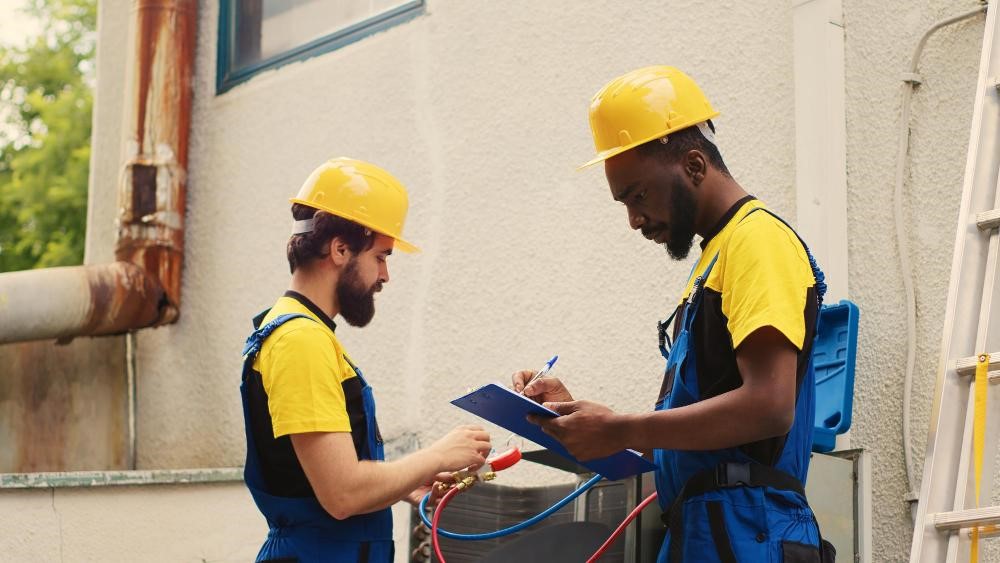
Image Source
2. Sealing and Creating Openings Radon-Resistant
After planning, the technician will seal cracks in floors and walls, fill openings around pipes, and cover sump pits or floor drains. These sealers focus on the suction of the mitigator fan, not allowing the gas to escape.
Sealing isn’t designed to remove radon alone; it supports the vacuum created by the fan and piping. The installer uses durable materials like sealants intended for concrete and masonry to ensure an airtight result that lasts longer.
Such step can take a few hours, depending on the size and complexity of the home. You’ll see dark seal lines and patches around penetrations. While somewhat subtle, these seal points are an important part of the strategy to prevent radon from entering your home.
3. Installing the Suction Point and Piping Network
The suction point is the heart of a radon mitigation system—the spot underneath the slab where it all starts. Following an air inlet port in a crawlspace or drilling a hole, the installer places a suction pit and attaches a continuous piece of rigid PVC piping that runs vertically.
The pipe goes to the outside, often through a wall, soffit, or roof vented several feet higher than the highest window or eave. When running, the fan removes radon-laden soil gas from beneath the slab and exhausts it outside your home before it migrates inside.
Depending on your home’s layout, you’ll watch tidy pipe runs winding around corners or being tucked behind walls. Professional radon mitigation system installers often focus on creating a visual balance that minimizes exposure to eyesore lines.

Image Source
4. Fan Installation and Operation Testing
With the piping in the ground, the technicians install a specially designed radon fan in an attic, garage, or outside the home. These fans are designed to run continuously and quietly without impacting your home. After turning the power on, the system is tested.
The installer creates a manometer or pressure gauge to measure negative pressure beneath the slab. You may also see them run a smoke test (literally inject visible smoke in) as a check to verify airflow direction.
This confirms whether there are any leaks or backdrafts in the pipework. They’ll test seals, examine electrical connections, and ensure that the fan is not too close to the living space to be unsafe.
At this point, they usually initiate another brief radon test to ensure that levels fall within an acceptable range. That test could take days, but it will prove it works well.
5. Final Inspections, Paperwork, and Long Term Planning
Once the system is up and running, the installer will clean up and stick a label on the box recording the installation date and the test results. They’ll also explain how to use the system and sometimes recommend ways to reduce radon levels in your home.
You’ll learn how to read the pressure gauge, what sort of noise to expect, and what might qualify as abnormal. They will also furnish you with documentation that details your warranty coverage, the recommended maintenance schedule, and guidelines on when to retest.
While it is standard every five years, they may recommend sooner if major foundation work occurs. From here, you’re left with more than equipment. You have confidence that your home is healthier and safer. Even better, you’ve seen the care that went into ensuring this isn’t random mitigation but a thoughtful, precise process built for your unique home.

Image Source
Final Thoughts
Moving forward with a radon mitigation system is about more than just equipment installation — it’s about keeping your family safe. Each step, from the first home assessment to sealing, piping, fan installation, testing, and final walkthrough, makes a difference.
Months or even years later, when you glance at how the exhaust pipe extends above the roof or check the manometer, you will know exactly what went into protecting your home. It’s not just a system; it’s peace of mind.