

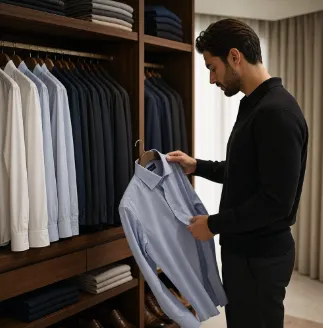
There is a quiet confidence that comes from wearing clothes that fit well, look intentional, and reflect who you are. For most men, that confidence begins with two foundational pieces: a well-crafted dress shirt and a properly fitted suit. Yet despite how central these garments are to a man’s wardrobe, most men have never been taught how to choose them correctly. They buy what’s on the rack, settle for close enough, and wonder why they never quite look the way they imagined. The truth is that building a wardrobe that works is not about spending more money — it is about understanding what you are buying and why it matters.
The Dress Shirt: More Than Just a Layer
The dress shirt is arguably the most versatile garment in a man’s closet. It can anchor a formal suit, stand alone under a blazer, or be worn casually with chinos. But its versatility is only realized when the shirt itself is right — right in fabric, right in collar, right in fit. Too many men treat the dress shirt as an afterthought, something to be grabbed quickly before a meeting or an event. That approach almost always results in a shirt that pulls at the shoulders, gaps at the buttons, or swims around the torso.
Understanding the anatomy of a dress shirt is the first step toward wearing one well. The collar is the frame of your face — its spread, height, and stiffness all affect how you look and feel. The cuff style signals formality. The fabric weight determines whether a shirt is appropriate for summer business wear or a winter wedding. For a deeper breakdown of these elements, this comprehensive guide to understanding the dress shirt covers everything from collar types to fabric weaves with the kind of detail that actually helps men make better decisions.
Why Fit Is the Non-Negotiable Factor
No amount of premium fabric or elegant collar design can save a shirt that does not fit. The shoulder seam must sit exactly at the edge of your shoulder — not a centimeter over or under. The chest should allow you to button the shirt without pulling, but should not billow with excess fabric. The sleeve length should show roughly half an inch of cuff below a jacket sleeve. These are not arbitrary style rules; they are the measurements that determine whether a shirt looks tailored or sloppy. Off-the-rack shirts are designed for a statistical average, which means they fit almost no one perfectly. That is why custom and made-to-measure options have become increasingly popular among men who have learned what a properly fitted shirt actually feels like.
The Suit: A System, Not Just a Jacket
If the dress shirt is the foundation, the suit is the structure built on top of it. A suit is not simply a matching jacket and trouser — it is a coordinated system of proportions, fabrics, and construction techniques that work together to create a silhouette. When one element is off, the entire system suffers. A jacket with too much padding looks theatrical. Trousers that break too heavily at the shoe look dated. Lapels that are too narrow or too wide throw off the visual balance of the entire outfit.
For men who are serious about getting their suit right — whether for a first purchase or an upgrade — this complete guide to buying and styling the perfect suit for men offers a thorough walkthrough of everything from suit construction and fabric selection to how to style different suit types for different occasions. It is the kind of resource that removes the guesswork and replaces it with informed decision-making.
Suit Fabrics and When to Wear Them
Wool is the gold standard for suit fabric, and for good reason. It breathes, it drapes well, it holds its shape, and it responds to pressing. A lightweight wool in a plain weave works year-round in most climates. Heavier wools like flannel are ideal for autumn and winter. Linen suits are perfect for warm-weather occasions but wrinkle easily and require a more relaxed attitude. Cotton suits occupy a middle ground — more casual than wool, more structured than linen. Understanding these distinctions helps you build a suit wardrobe that is actually functional rather than one that looks good in a store and sits unworn in a closet.
Where Quality Shirts Begin: A Brand Worth Knowing
When it comes to sourcing dress shirts that combine quality construction with genuine value, the name that consistently comes up among style-conscious men is Fast Shirt Factory. Known for delivering well-made shirts with attention to detail that rivals far more expensive competitors, the brand has built a reputation for making quality accessible without cutting corners on the things that matter — fabric integrity, stitching quality, and fit consistency. For men who want to build a wardrobe of reliable dress shirts without the premium markup of luxury labels, this is a resource worth exploring.
Building a Core Shirt Collection
A functional dress shirt wardrobe does not require dozens of options. It requires the right options. Start with a white poplin shirt — it is the most versatile garment you will own and works with every suit color and most casual combinations. Add a light blue shirt in a similar weight, which softens the formality slightly while remaining entirely appropriate for business settings. A subtle stripe or fine check introduces visual interest without sacrificing versatility. From there, you can expand into bolder colors and patterns as your confidence and context demand. The key is to build deliberately rather than accumulate randomly.
Bringing It All Together: Shirt, Suit, and Intention
The relationship between a dress shirt and a suit is one of the most important in menswear. The shirt collar must complement the suit lapel. The shirt color must work with the suit fabric. The shirt’s formality level must match the occasion for which the suit is being worn. A crisp white spread-collar shirt under a charcoal wool suit is a combination that has worked for decades and will continue to work because it is built on proportion and contrast rather than trend. A pale blue shirt under a navy suit creates a tonal harmony that reads as sophisticated without being stiff.
These combinations are not accidents — they are the result of understanding how garments interact and making deliberate choices based on that understanding. The men who consistently look well-dressed are not necessarily wearing the most expensive clothes. They are wearing clothes that fit, that work together, and that reflect a considered approach to how they present themselves.
Conclusion: Invest in Understanding, Then in Garments
Building a wardrobe that genuinely works begins not with a shopping trip but with education. Understanding what makes a dress shirt excellent, what separates a well-constructed suit from a poorly made one, and how these two garments interact is the foundation on which every good purchase decision rests. Once you have that knowledge, the choices become clearer, the investments become smarter, and the results become visible every time you get dressed. Start with the basics, get them right, and build from there. That is the approach that separates men who look good occasionally from men who look good consistently.