

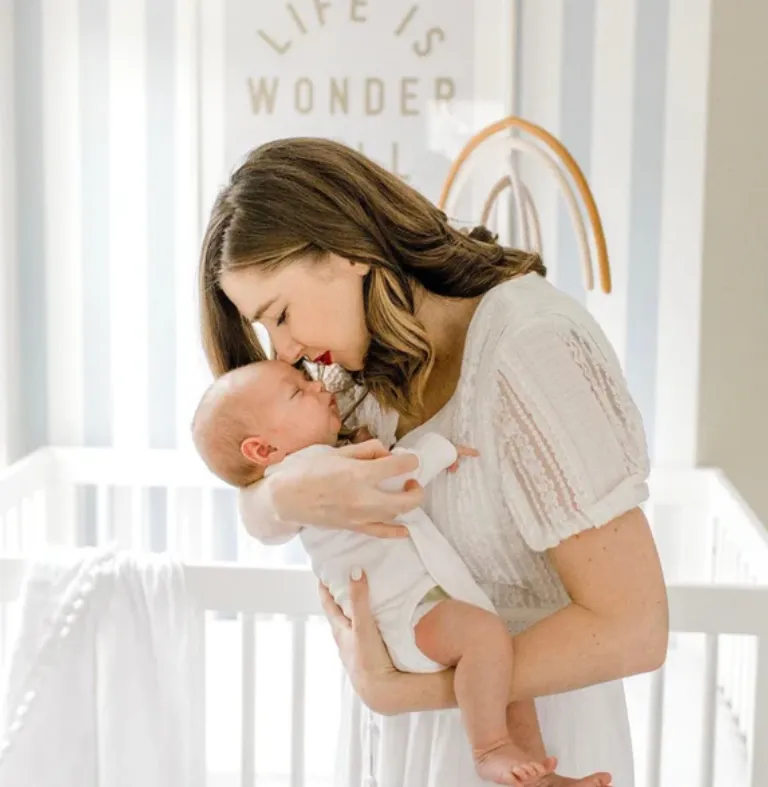
A nursery is one of the few rooms where you get to design entirely around feeling. Not function, not resale value, not what works with the rest of the house — just the atmosphere you want a very small person to wake up in every morning. Nursery wallpaper is one of the most effective tools for creating that atmosphere, and peel and stick format makes it the obvious choice for a room that will inevitably change as the child grows.
The practical case is straightforward: babies become toddlers, toddlers become children with opinions, and the soft cloud print that felt perfect at three months may be ready for an update by age three. Removable wallpaper means you’re not repainting every time — you’re simply peeling back one chapter and starting the next.
Choosing a Style That Lasts Beyond the Newborn Stage
The temptation with nursery design is to go all-in on something very sweet and very specific — cartoon animals, pastel rainbows, alphabet prints. These work beautifully for newborns and young babies, but they have a shorter design lifespan than most parents anticipate.
A more considered approach is to choose wallpaper that has genuine visual quality rather than simply nursery-appropriate subject matter. Soft botanical prints, delicate watercolor animal illustrations, hand-drawn celestial patterns, and gentle geometric designs in muted tones all read as nursery-appropriate for babies while remaining visually interesting — and not obviously babyish — as the child grows into a toddler.
The sweet spot is wallpaper that a parent would genuinely find beautiful independent of the nursery context. If you’d hang it somewhere else in the house, it’s probably a good choice for a room that will evolve.
Color and Atmosphere: Getting the Balance Right
Color psychology in nurseries is a topic that generates a lot of conflicting advice, but a few principles hold up reasonably well in practice.
Soft, warm neutrals — cream, warm white, dusty sand — create a calm, womb-like atmosphere that suits newborns particularly well. They also provide the most flexibility as you add furniture, textiles, and accessories, and they photograph beautifully in the natural light that most nurseries are designed to maximize.
Muted pastels — sage green, dusty blue, soft terracotta, pale lavender — are the current sweet spot in nursery design. These are colors that feel gentle without being saccharine, and they work equally well for any child regardless of gender. Sage green in particular has become a near-universal nursery choice because it connects to nature, pairs easily with natural wood furniture, and creates a restful environment without feeling cold.
Deeper, richer tones are worth considering for accent walls rather than full coverage. A deep navy or forest green behind the crib creates a cocooning focal point that’s genuinely beautiful and gives the room a sophistication that pure pastels sometimes lack.
Pattern Scale and the Size of the Room
Most nurseries are not large rooms, which means pattern scale matters more than in a spacious living room or bedroom. A very large-scale print — oversized jungle leaves, giant florals — can overwhelm a small space and make it feel busier than restful. Medium to small-scale patterns generally work better in compact nurseries: delicate botanicals, small animal repeats, fine geometric grids, soft cloud or star patterns.
That said, an accent wall behind the crib can handle a bolder pattern than the room might otherwise support. Because it’s a single wall rather than four, you can use something with more visual weight as a focal point without the room feeling chaotic.
The Accent Wall Approach
For nurseries specifically, the accent wall behind the crib is often the most practical and visually effective solution. It creates a clear focal point — the crib becomes a considered design element rather than just a piece of furniture — and it limits the amount of wallpaper you need to purchase and install.
A classic combination: soft painted walls in a coordinating muted tone, with a single wall of peel and stick wallpaper behind the crib featuring a slightly bolder botanical or illustrated pattern. Simple, balanced, and easy to update when the time comes.
What to Look For in Nursery Wallpaper
Beyond aesthetics, a few practical considerations matter more in a nursery than in other rooms.
Low VOC or non-toxic materials are worth prioritizing. Babies spend a significant portion of their time in this room, often with windows closed, and the materials on the walls should be as benign as possible. Most quality peel and stick wallpaper is water-based and low-emission, but it’s worth confirming before purchasing.
Washability matters more than you might expect. Nursery walls encounter everything from spit-up to marker to sticky handprints as children grow. A wallpaper with a wipeable surface extends its lifespan considerably.
CostaCover’s nursery wallpaper collection covers the full range — from soft botanical and animal prints to gender-neutral geometric designs — all in peel and stick format. It’s a practical starting point whether you’re designing a newborn’s first room or refreshing a toddler’s space.
A Final Thought
The best nursery wallpaper is the one you’ll still be happy looking at during a 3am feed. Choose something genuinely beautiful, not just functionally appropriate — because you’ll be spending more time in that room than you currently imagine, and the atmosphere you create matters for you just as much as for the baby.