


Mold and mildew can turn a nice outdoor shade into a smelly eyesore. How do you stop them from taking over? Start by learning what causes them, pick the right materials, follow a steady care routine, and use good cleaning and protection methods. With a clear plan, you can keep your shade comfy and good-looking for a long time.
Whether you use retractable awnings, patio shades, or a waterproof garden sail canopy, the steps to prevent and fix mold are much the same. These growths stain fabric, break down threads, and weaken water resistance. The bright side: with a bit of know-how and steady upkeep, you can keep your shade looking clean and make it last longer.
What Causes Mold and Mildew on Outdoor Shade?
Mold and mildew are living organisms that grow when the conditions are right. Knowing those conditions helps you stop them early. Your shade can turn into a growth spot if the key factors line up.
Key Conditions That Encourage Mold Growth
- Moisture: Humidity above 60-70% and damp fabric after rain, dew, or condensation.
- Organic matter: Dirt, dust, pollen, bird droppings, insect bits, tree sap, and food particles feed mold.
- Poor airflow: Still air keeps fabric wet longer, especially under fixed awnings or folded canvas.
- Warmth: Many species like 70-90°F (21-32°C).
- Shade and slow drying: Less sun means longer damp times.
Daily grime adds to the problem. When organic debris piles up and the fabric stays damp, mold settles in fast. A common mistake is rolling up an awning while it’s even slightly wet, trapping moisture where mold can grow out of sight.
Risks Mold and Mildew Pose to Outdoor Fabrics and Structures
Mold does more than look bad. It breaks down what it grows on and can affect health. Common problems include:
- Stains that are hard to remove
- Weak fabric and frayed edges
- Damaged stitching, especially at seams
- Loss of water-repellent coatings
- Possible breathing or skin irritation
Research shows many mildew species digest cellulose, the main part of cotton, so cotton canvas is at higher risk over time.
Types of Outdoor Shade Materials and Their Vulnerability
Some fabrics fight mold better than others. Material choice has a big effect on how easily mold takes hold.
Which Fabrics Are Most Prone to Mold and Mildew?
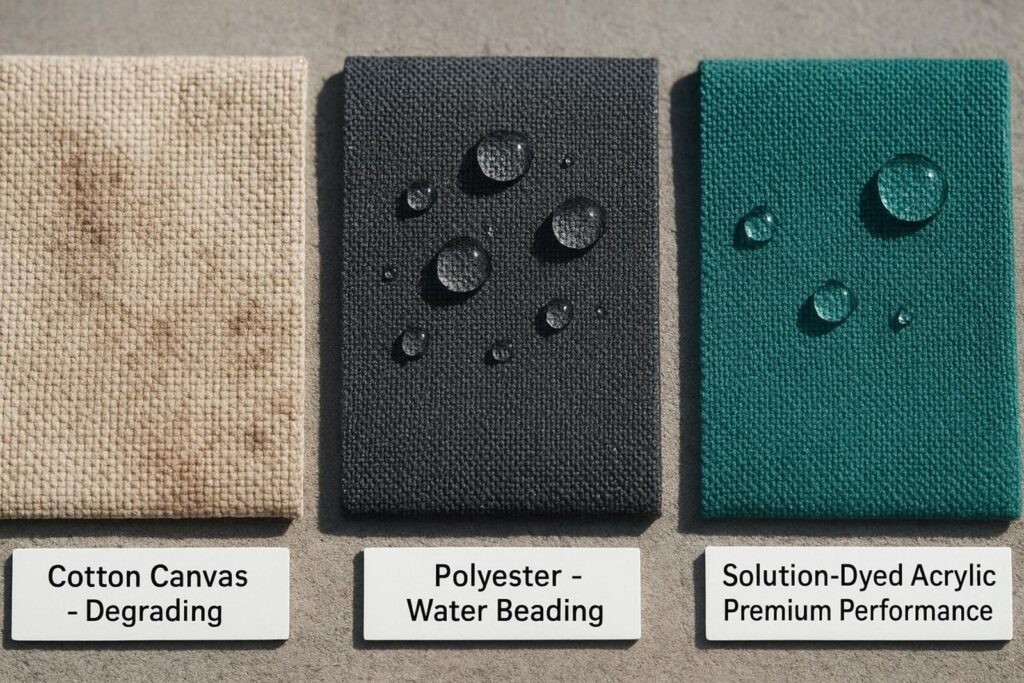
Natural fibers like cotton canvas feed mold and soak up water easily, so they need extra care: full drying and good airflow after any moisture. Synthetics such as polyester, acrylic, and vinyl resist mold better, but they can still grow mildew when dirt and oils sit on the surface and the fabric stays wet. Vinyl-coated fabrics resist water well, but seams and the back side can still collect moisture.
| Material | Moisture Uptake | Food Source for Mold | Mildew Resistance | Care Notes |
| Cotton canvas | High | Yes (cellulose) | Low | Dry fully; keep airflow high; clean often |
| Polyester canvas | Low | No | Medium to High | Remove surface dirt; reproof as needed |
| Acrylic (solution-dyed) | Low | No | High | Good UV hold; add protectant over time |
| Vinyl-coated/laminated | Very Low | No | High | Clean seams; watch for yellowing |
Impact of Material Choice on Mold Prevention
Polyester and acrylic fabrics resist moisture and don’t feed mildew, so they need less work than cotton. Acrylics, especially solution-dyed types, often include mold blockers during manufacturing and hold color well in sun. Vinyl-coated fabrics keep water out and slow mildew growth on the surface. Even with these, keep them clean and dry. Knowing your fabric helps you set a care plan that works for your setting.
How to Prevent Mold and Mildew from Damaging Outdoor Shade
Stopping mold early is easier than fixing a big problem later. A steady, simple routine will save time and extend the life of your shade.
Routine Cleaning and Maintenance Tips
- Once a month (more often in dusty or windy areas), brush off loose dirt, dust, leaves, and droppings with a soft brush.
- Wash with mild dish soap and water using a soft cloth or sponge.
- Rinse well with a garden hose to remove all soap.
- Avoid harsh chemicals that can damage fabric.
- Never use a pressure washer on fabric shades.
Proper Drying Methods After Rain or Washing
Moisture is the main trigger for mildew. After rain or cleaning, let the fabric dry all the way before you roll it up. Open the awning on sunny, breezy days so it can air out. Check seams and hems, as they hold moisture the longest. Dry times vary by fabric, temperature, and humidity-from a few hours to a day or two. Light sun helps with drying, but long, intense sun can fade some fabrics.
Improving Air Circulation Around Shade Structures
- Leave space around and under the shade for airflow.
- Trim branches and shrubs that block wind and hold moisture.
- Use poles or frames to “tent” covers so water doesn’t pool.
Applying Protective Coatings or Treatments
Sprays that repel water and slow mildew growth can help a lot. Many products do both jobs at once. Tests show big drops in mildew on treated fabric (often 70-80% less over two years in humid areas). Apply after cleaning and drying. Cover the fabric evenly and let it cure. Sun, abrasion, and washing wear coatings down, so reapply every 1-3 years or when water stops beading.
Safe Storage Techniques During Off-Seasons
- Store only when very clean and fully dry.
- Pick a dry, ventilated place; avoid damp basements, hot attics, and wet garages.
- Use breathable bags or a cotton sheet for natural fibers; avoid sealed plastic unless you are certain the fabric is bone dry.
- Roll large pieces loosely instead of tight folding to reduce creases.
- Keep items off the floor and add reusable desiccant packs to control moisture.
Tips for Keeping Outdoor Shade Mold-Free Year Round
Keeping mold away takes steady habits and the right tools. Make small tasks part of your weekly and monthly routine.
Recommended Maintenance Schedule
| Task | How Often |
| Dust/brush off loose debris | Weekly |
| Wash with mild soap and rinse | Monthly |
| Inspect fabric for tears, sagging, fading | Every 3 months |
| Check hardware, tighten bolts, clean tracks | Every 6 months |
| Retract during heavy rain or strong winds | As needed |
Product Recommendations for Lasting Protection
- General cleaning: mild dish soap (e.g., Dawn, Woolite) and water.
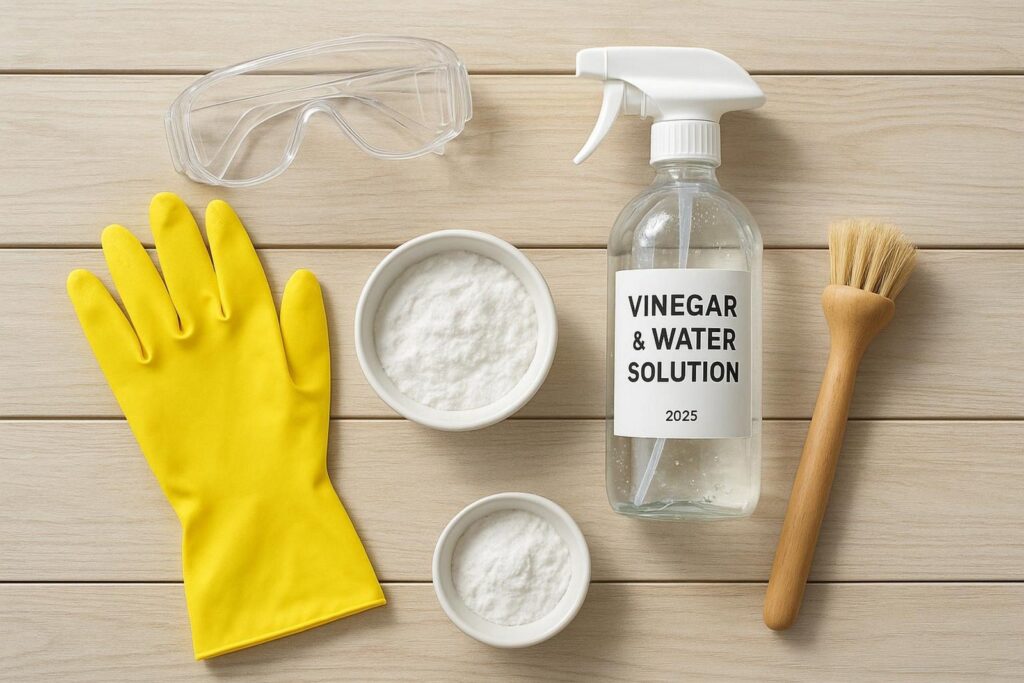
- Mold removal: white vinegar diluted 1:1 with water, or a baking soda paste for gentle scrubbing.
- Tough spots: 6:1 water to hydrogen peroxide (spot test first).
- After cleaning: apply an outdoor fabric protector with water repellency and UV resistance; some cleaners (e.g., Starbrite, Simple Green Oxy Solve) include agents that slow mildew regrowth.
Always read labels carefully to match products to your fabric and follow use directions.
How to Remove Mold and Mildew from Outdoor Shade Fabrics
Even with steady care, mold can show up. Act quickly and clean safely to protect your fabric.
Essential Safety Precautions Before Cleaning
- Work outside or in a well-ventilated area.
- Wear waterproof gloves and eye protection.
- If using bleach or strong cleaners, or if you’re sensitive to spores, wear a suitable mask (e.g., N95).
- Spot test cleaners on a hidden area first.
- Never mix bleach with ammonia or acids (including vinegar).
Step-by-Step Guide for Cleaning Mold Off Outdoor Shades
- Dry brush: With the fabric dry, use a soft brush to remove loose mold and debris outside.
- Apply cleaner: Use vinegar solution, baking soda paste, a peroxide mix, or a suitable commercial product on affected areas. Let it sit for the time on the label (or 15-60 minutes for common DIY mixes), but don’t let it dry out.
- Light scrub: Gently scrub with a soft brush in small circles if stains remain.
- Rinse well: Flush with plenty of clean water until all cleaner and residue are gone.
- Dry fully: Let the shade air dry completely, paying extra attention to seams and hems.
When to Use Vinegar, Baking Soda, or Commercial Cleaners
- Vinegar (1:1 with water): Good all-purpose option, helps with odors, gentle on most fabrics.
- Baking soda paste: Mild abrasive for light mildew and surface stains; great deodorizer.
- Commercial mildew removers: Best for heavy growth or stubborn stains; pick products that match your fabric and follow safety directions.
How to Tackle Stubborn Mold Stains
For stains that won’t budge, try 3% hydrogen peroxide after vinegar or baking soda. It can lighten stains and kill spores. Always spot test, especially on colored fabric. Use diluted chlorine bleach only as a last step and only on fabrics that are clearly bleach-safe (often white cotton or certain synthetics). Mix 1 part bleach with 4-10 parts cool water, limit contact to 5-15 minutes, and rinse very thoroughly. If stains are old and deep, repeat cleaning or reach out to a pro. Sometimes replacement is the only way to get a clean look again.
Protecting Shade Frames and Hardware from Mold Issues
The frame and hardware need care too. Dirt and moisture on metal or wood can host mold and cause damage over time.
Treating and Preventing Mold on Metal or Wood Frames
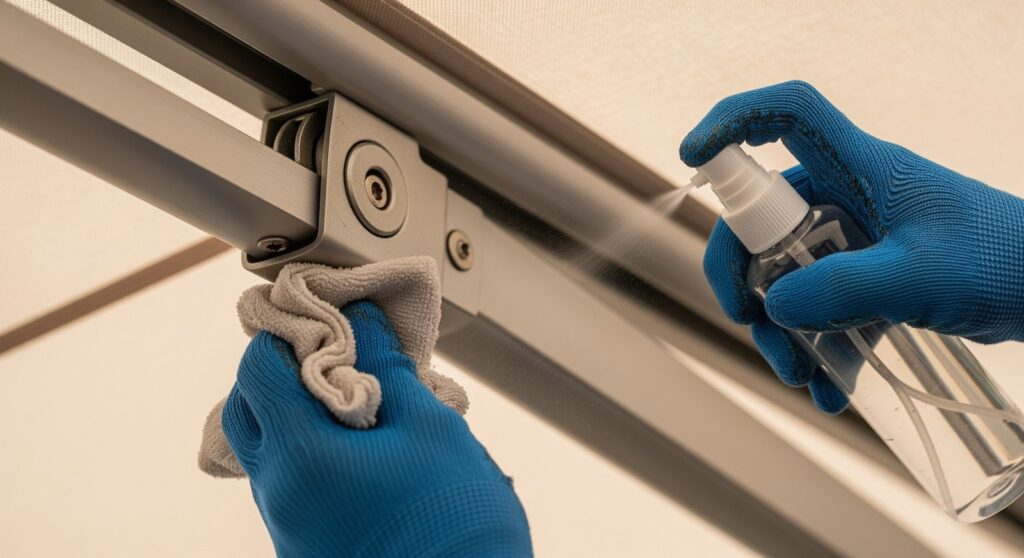
- Metal: Wipe with mild soap and water; check screws and brackets for rust. Sand and repaint rusty spots with rust-inhibiting enamel to seal and protect, especially near the coast or in humid areas.
- Wood: Seal or paint with outdoor finishes that resist mold. Clean with diluted vinegar or a wood-safe cleaner. Let wood dry all the way after cleaning.
- Motorized units: Don’t spray water on motors or controls. Unplug power before cleaning nearby parts. Wipe with a damp cloth and lube moving joints with silicone- or paraffin-based spray (avoid WD-40, which attracts dirt).
When Should You Replace Outdoor Shade Damaged by Mold?
Sometimes the damage is too far gone. Knowing when to stop cleaning and replace saves time and money.
Signs That Mold Has Permanently Compromised the Material
- Deep stains that stay after several careful cleanings
- Fabric that feels thin, papery, or brittle, or tears easily
- Musty odor that won’t go away even after long airing and rinsing
- Visible breakdown like crumbling, flaking, or holes
If you see these signs, the fabric’s strength is likely gone, and replacement makes the most sense.
Cleaning Versus Replacement: Making the Right Choice
Weigh time and cost. DIY cleaning is great for light to moderate growth on sound fabric. For heavy stains, strong odors, or weak material, calling a pro can help, but repeat deep cleans can add up. In many cases, replacing the fabric is cheaper over time if the frame and mechanics are still fine.
Think about item value and size. A small, cheap cushion cover with heavy mildew is easy to swap. A large, custom boat cover or built-in awning may warrant pro restoration before you decide. If strength is compromised or someone in your home is sensitive to mold and you can’t clear it fully, replacement supports a healthier space. Upgrading to mold-resistant fabrics or a full cassette that closes the fabric away from weather can pay off long term.
Frequently Asked Questions About Mold and Mildew on Outdoor Shade
Even after all these tips, a few common questions come up.
Should I Hire a Professional to Clean Moldy Outdoor Shade?
It depends on how bad the growth is, the fabric type, and your comfort with cleaners and ladders. For light to moderate growth that you can reach, vinegar, baking soda, or mild commercial products often work. For widespread mold, very dark growth, or deep seams you can’t reach, a pro is a good investment. They have tools and stronger, fabric-safe solutions and know how to work with delicate fabrics or motorized systems without causing damage. If you notice lingering odor or weak fabric after your own efforts, a pro can check and advise on cleaning versus replacement. They can often add years to your awning.
How Can I Prevent Mold Regrowth After Cleaning?
Keep conditions dry and clean. Make sure the shade is 100% dry before rolling, folding, or storing. Improve airflow, trim nearby plants, and air the shade out after rain or heavy dew. Brush off loose dirt and pollen often. After cleaning, apply a quality outdoor fabric protector that repels water and slows mildew. Set a steady routine-quick checks monthly and deeper cleans every few months-to stay ahead of growth. Fast action and regular care are your best defense.