

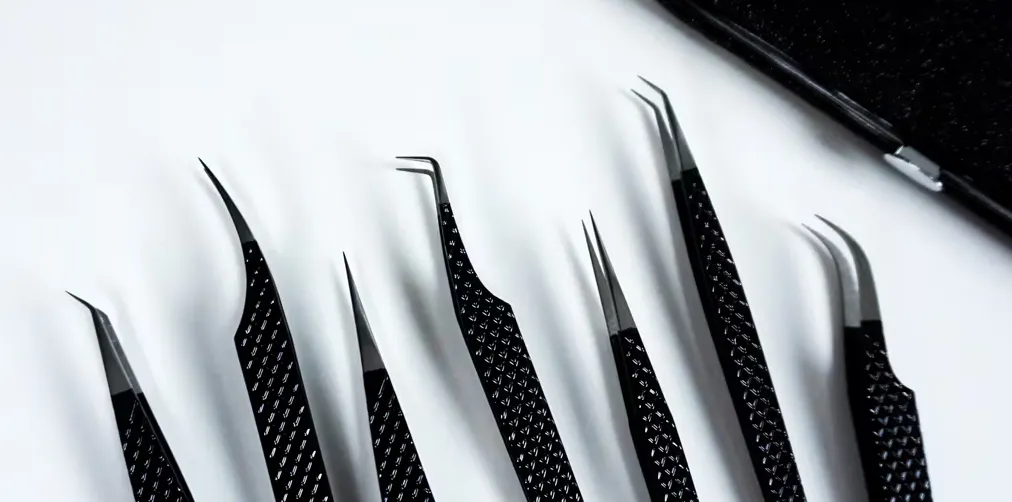
Lash extensions require an incredible amount of precision, and your tools can either make or break your workflow. If you are struggling with split volume fans, dropped lashes, or hand fatigue by the end of the day, the culprit is almost always your choice of eyelash tweezers. Investing in high-quality lash tools is the fastest way to master your technique, increase your speed, and deliver flawless results that keep clients coming back.
Why Tweezers Matter
Many lash artists treat tweezers as an afterthought, but they are the most critical investment in your kit. Here is how premium professional lash tweezers impact your daily work:
· Precision: High-quality tips ensure you can pick up the finest volume lashes without them slipping or twisting out of your grip.
· Speed: When your tweezers have a perfect “sweet spot,” you do not waste time refanning or correcting dropped extensions, significantly cutting down your set time.
· Hand Comfort: Properly calibrated tension means you do not have to squeeze with maximum force. This protects your hands from long-term strain, cramping, and repetitive motion injuries.
Types of Lash Tweezers
Every step of the lash application process requires a specific tool shape. A reliable lash supply store should offer a variety of specialized designs to match your technique.
· Straight (Isolation): These are essential for finding and separating a single natural lash. They feature a fine, straight point to navigate dense lash rows without poking the client.
· Curved (Classic Sets): Featuring a slight angle, these tweezers provide a comfortable wrist position when picking up and placing classic individual extensions.
· Volume Tweezers: Usually shaped like an L, J, or 45-degree angle, these are engineered specifically as lash tweezers for volume fans. They have a larger surface area at the tip to grab multiple extensions simultaneously.
· Boot Tweezers: Shaped like a tiny boot, these offer a wide sweet spot and strong grip, making them a favorite for mega-volume artists who use the “on-the-strip” fanning method.
How to Choose the Right Tweezers
Figuring out how to choose lash tweezers comes down to personal preference, but you should always evaluate three main factors before buying:
Grip and tension
The “tension” refers to how much force is required to close the tips. Look for tweezers with medium-to-soft tension so your fingers do not tire out during a full mega-volume set.
Tip precision
The tips must align perfectly with zero gaps. If the tips do not meet flush, volume fans will fall apart the second you try to pull them off the sticky strip.
Weight and ergonomics
The tool should feel balanced in your hand—neither front-heavy nor too light. The length should allow you to work comfortably without hitting the client’s brow bone.
Materials and Quality
The manufacturing process determines how long your eyelash extension tweezers will retain their accuracy.
· Stainless Steel: Look for surgical-grade stainless steel or titanium. These materials resist corrosion from medical-grade disinfectants and hold their alignment over time.
· Hand-Tested Tips: The best tweezers for lash extensions are hand-tested by manufacturers before shipping to guarantee the sweet spot is perfectly calibrated.
· Anti-Static Properties: High-quality coatings prevent static electricity, ensuring that fine synthetic lashes do not cling to the metal when you try to release them onto the natural lash.
Tips for Better Performance
Even the most expensive tweezers will fail if they are poorly maintained or used incorrectly.
· Proper grip technique: Hold the tweezer between your thumb and index/middle fingers, resting it gently in the web of your hand. Let the tool do the gripping work, not your muscles.
· Regular cleaning: Wipe away residual adhesive immediately using a dedicated tweezer cleanser or acetone. Never scrape the tips with abrasive metal tools, as this ruins the alignment.
· Safe storage: Always store your tools in a padded tweezer case with protective silicone caps on the tips. A single drop onto a hard floor can permanently ruin a precision tip.
FAQ
Q: Which tweezers are best for beginners?
A: Beginners should start with a reliable two-tweezer setup: a classic straight tweezer for isolation and a standard curved or isolation-crane tweezer for classic placement. Avoid advanced boot tweezers until your hand placement and isolation habits are fully formed.
Q: How many tweezers does a lash artist need?
A: At an absolute minimum, you need two pairs per service. However, a working professional should always keep at least 3 to 4 pairs on hand. Accidents happen, and having a sanitized backup pair ready if you drop a tool mid-service prevents unnecessary stress.
Conclusion: Upgrade Your Kit, Elevate Your Sets
Your tweezers are the most important connection between your technique and the client’s lash line. Settling for generic, uncalibrated tools might save money upfront, but it costs you in slowed-down set times, dropped fans, and hand fatigue.
By investing in high-quality, hand-tested eyelash extension tweezers, you remove the guesswork from your application. When your tools work with you rather than against you, creating perfect volume fans and maintaining flawless isolation becomes second nature. Treat your tweezers as an investment in your craft, maintain them properly, and your results will speak for themselves.